

How to Choose Shutters for Sliding Doors
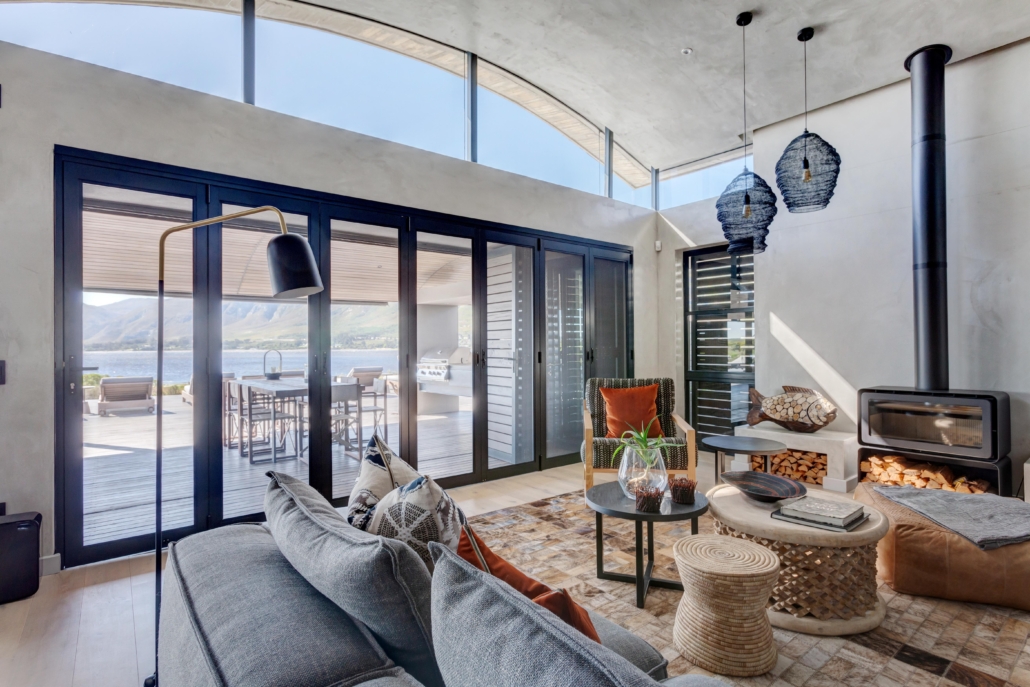
Few features change a living area quite like sliding doors do. Rooms appear brighter, gardens become part of the view, and the entire space feels less boxed in compared to older layouts with smaller windows.
Homeowners usually love them right up until the point where blinds or coverings need to be chosen.
Standard window solutions rarely translate properly onto sliding doors, which is where the process starts becoming more awkward than people first assume.
The problem is scale.
Large glass openings need:
- Privacy
- Light control
- Airflow
- Insulation
- Smooth access
That is where many traditional window coverings struggle.
Curtains often become bulky and difficult to manage across wide openings. Blinds can feel impractical on frequently used patio doors. And poorly planned shutter systems sometimes interfere with movement or stack awkwardly when opened.
The right shutters solve these issues
Sliding shutter systems are more commonly used on wider door spans where standard window coverings do not always look quite right anymore.
Privacy and controlling sunlight are still important, but people also want shutters that suit the room better from a design perspective.
Are shutters suitable for sliding doors?
Sliding doors can be difficult to cover properly because standard blinds and curtains usually become frustrating after daily use. Shutters solve much of that when they are fitted on the correct track system.
Bifold and bypass options allow wider door spaces to stay accessible without blocking movement through the opening, while still giving decent airflow, privacy and light filtering when needed.
There is also a more built-in appearance with shutters which many people end up preferring once everything is installed and used over time.
Why Sliding Doors Need a Different Shutter System
Sliding doors place vastly different demands on shutters compared to normal windows.
Standard window shutters are usually designed around:
- Smaller spans
- Lighter usage
- Fixed openings
Sliding doors are different because they are used constantly.
Patio and stacking doors often function as major access points between:
- Lounges
- Kitchens
- Entertainment areas
- Gardens
- Pool spaces
That means the shutters must operate smoothly and repeatedly without becoming inconvenient.
Large glass spans also create structural challenges.
Poorly designed systems may:
- Sag over time
- Feel heavy
- Stack awkwardly
- Obstruct movement
- Reduce usable space
This is why operating configuration matters just as much as the shutter material itself.
Common Sliding Door Challenges
| Challenge | Why It Matters |
| Large glass spans | Requires stronger support systems |
| Frequent daily use | Smooth operation is essential |
| Limited stacking space | Panels must move efficiently |
| Privacy concerns | Large openings increase visibility |
| Sun exposure | More glare and heat control needed |
| Indoor-outdoor flow | Access must remain unobstructed |
Homeowners sometimes focus too heavily on how shutters look from the outside without thinking about what using them is like during an ordinary day at home.
Panels which seem stylish at first can become surprisingly inconvenient once you start opening and closing doors constantly, especially in busier parts of the house where everything is used more roughly and more frequently than people picture beforehand.
The Best Shutter Styles for Sliding Doors
There are a few shutter systems people lean towards for sliding doors, partly because some cope better with larger openings while others become frustrating after a few months of regular use.
What suits one home over another usually depends on:
- Opening width
- Available stacking space
- Traffic flow
- Architectural style
- How often the doors are used
What shutters should you use on sliding doors?
Large glass doors can be awkward with standard shutter layouts, especially where there is regular foot traffic.
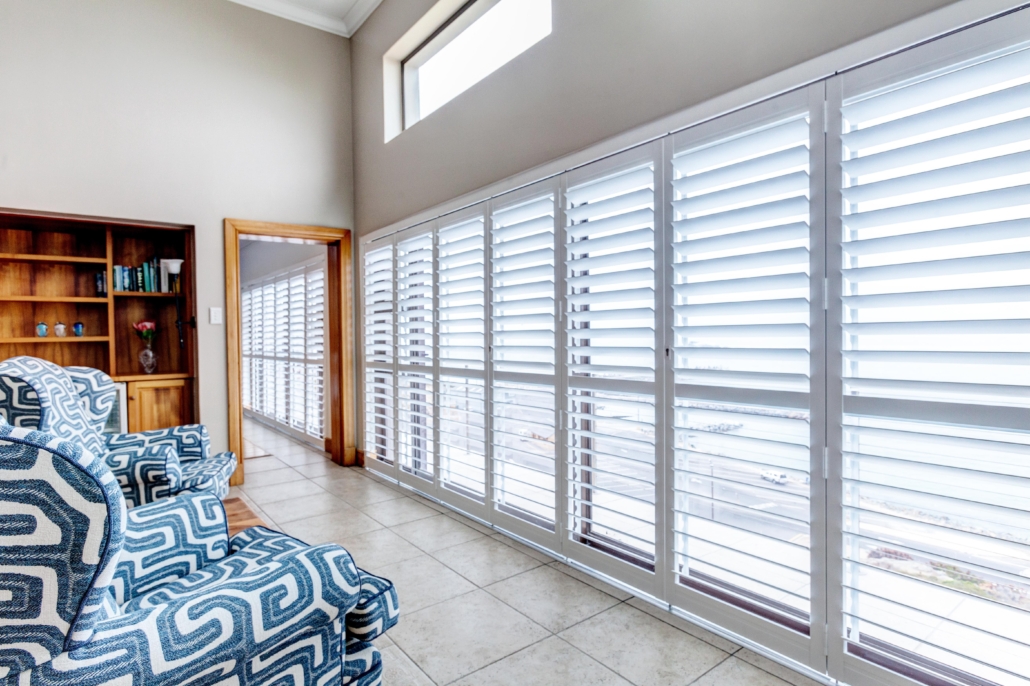
Tracked plantation shutters, bifold systems and bypass designs are commonly used since they open in sections and give easier access to the doors behind them.
Many homeowners also prefer them because they still provide decent light filtering without leaving the space boxed in.
Sliding Door Shutter System Comparison
| System | Best For |
| Bypass shutters | Wide patio doors |
| Bifold shutters | Large entertainment openings |
| Tracked shutters | Contemporary interiors |
| Hinged shutters | Smaller sliding doors |
| Fixed side panels | Decorative framing sections |
Bypass Shutters
Bypass systems slide behind one another on tracks.
They are especially practical when:
- Wall space is limited
- Doors open frequently
- Clean operation matters
Because the panels overlap rather than fold outward, bypass systems maintain a neat footprint.
Bifold Shutters
Bifold systems fold and stack together.
These work exceptionally well in:
- Large entertainment areas
- Wide stacking doors
- Indoor-outdoor living spaces
Tracked Shutters
Wider window spaces can be easier to cover with tracked shutters since the panels move with less resistance than hinged styles in bigger installations.
Contemporary homes usually pair with them naturally, especially where the interior has a simpler architectural look without ornate finishes.
Plantation Shutters Change the Look of Sliding Doors Entirely
Some sliding doors already take up half the room visually, so adding thick curtains around them does not always improve things. Plantation shutters approach the space differently because there is less fabric competing with the glass.
The overall finish usually appears more built into the room rather than something added afterwards to fill empty space.
Why Do Plantation Shutters Suit Sliding Doors So Well?
Sliding doors receive changing light conditions constantly during the day, especially in rooms facing direct sun.
Plantation shutters handle this better than many fabric coverings because the louvres can be adjusted gradually instead of opening or closing everything completely. Many homeowners end up preferring the more structured appearance as well.
Instead of fully opening or closing the covering, homeowners can angle the blades to:
- Soften glare
- Improve privacy
- Maintain airflow
- Reduce heat
- Preserve natural light
Benefits of Plantation Shutters for Sliding Doors
| Benefit | Result |
| Adjustable louvres | Flexible light control |
| Clean appearance | Less visual clutter |
| Better insulation | Reduced heat gain |
| Privacy control | Improved comfort |
| Custom fitment | Smooth architectural integration |
Using plantation shutters consistently throughout the home also creates stronger visual continuity between windows and sliding doors.
Aluminium Shutters for Big Sliding Doors
Wide sliding doors put more pressure on shutter panels over time, especially in homes with constant daily use. Aluminium handles that structural demand particularly well because it combines:
- Strength
- Stability
- Low weight
- Corrosion resistance
This makes aluminium especially suitable for:
- Patio doors
- Stacking doors
- Entertainment spaces
- Exterior openings
- Coastal properties
Are aluminium shutters better for sliding doors?
Yes. Some shutter materials start rubbing or pulling unevenly once the opening becomes too large. Aluminium usually avoids most of that, especially where the doors are used from morning to night.
Another major advantage is durability.
Unlike some timber products, aluminium does not:
- Warp
- Swell
- Crack
- Distort
That matters significantly in South African climates where:
- UV exposure is intense
- Temperature fluctuations are common
- Indoor-outdoor living is frequent
Why Aluminium Works Well on Sliding Doors
| Feature | Advantage |
| Structural strength | Better support for large spans |
| Lightweight operation | Easier movement |
| Durability | Long-term stability |
| Corrosion resistance | Ideal for coastal homes |
| Security integration | Reinforced protection |
Modern aluminium systems also integrate particularly well into contemporary architectural styles.
How Shutters Improve Privacy and Light Control on Sliding Doors
Large sliding doors create excellent openness during the day — but they also create privacy challenges once evening arrives.
This becomes especially noticeable in:
- Estate homes
- Urban properties
- Pool-facing lounges
- Entertainment areas
- Homes with neighbouring sightlines
Shutters solve this more flexibly than many traditional coverings.
Do shutters provide privacy on sliding glass doors?
Yes. Sliding doors have a way of exposing the whole room once darkness settles outside. Indoor lighting reflects straight back onto the glass, which can feel uncomfortable in the evenings.
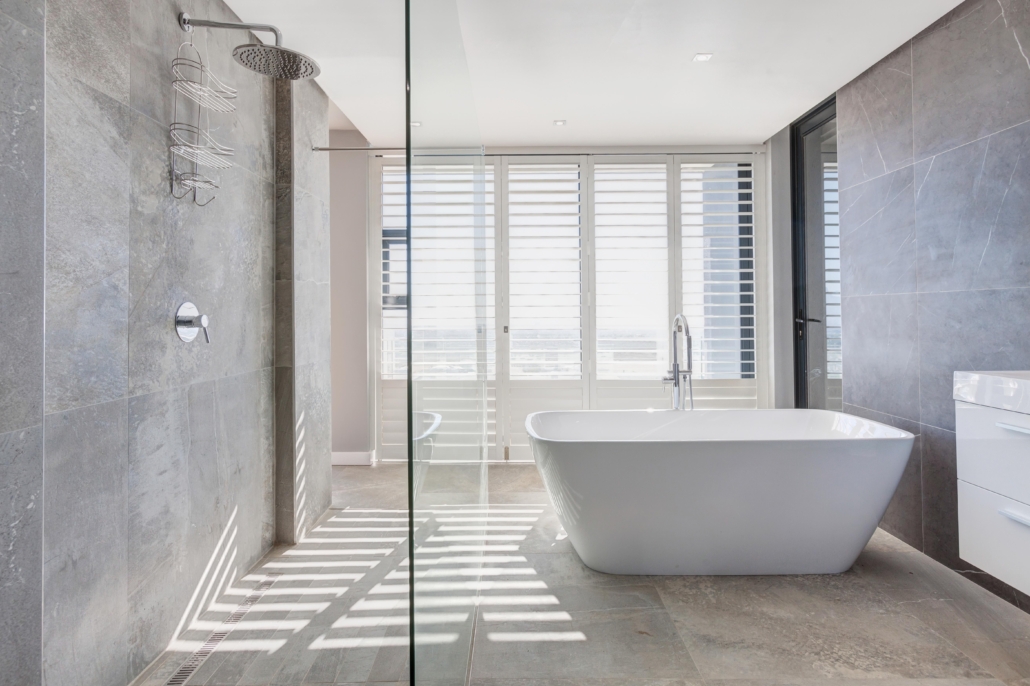
Shutters soften that completely since the louvres adjust easily without shutting daylight out during the day.
This flexibility is one of the biggest practical advantages shutters offer.
Curtains typically operate in two extremes, namely open or closed. In contrast, shutters allow gradual adjustment throughout the day, allowing homeowners to:
- Reduce glare
- Maintain airflow
- Soften sunlight
- Improve privacy
Sliding Door Privacy Comparison
| Covering | Privacy Control | Light Flexibility |
| Shutters | Excellent | Excellent |
| Curtains | Moderate | Limited |
| Roller blinds | Good | Moderate |
| Sheers | Low | High |
Do Shutters Interfere with Sliding Doors?
This is one of the biggest concerns homeowners have before installation.
The assumption is understandable.
Large shutter panels look substantial, so many people worry they will:
- Block movement
- Feel awkward
- Limit access
- Complicate daily use
Modern systems are designed specifically around movement efficiency.
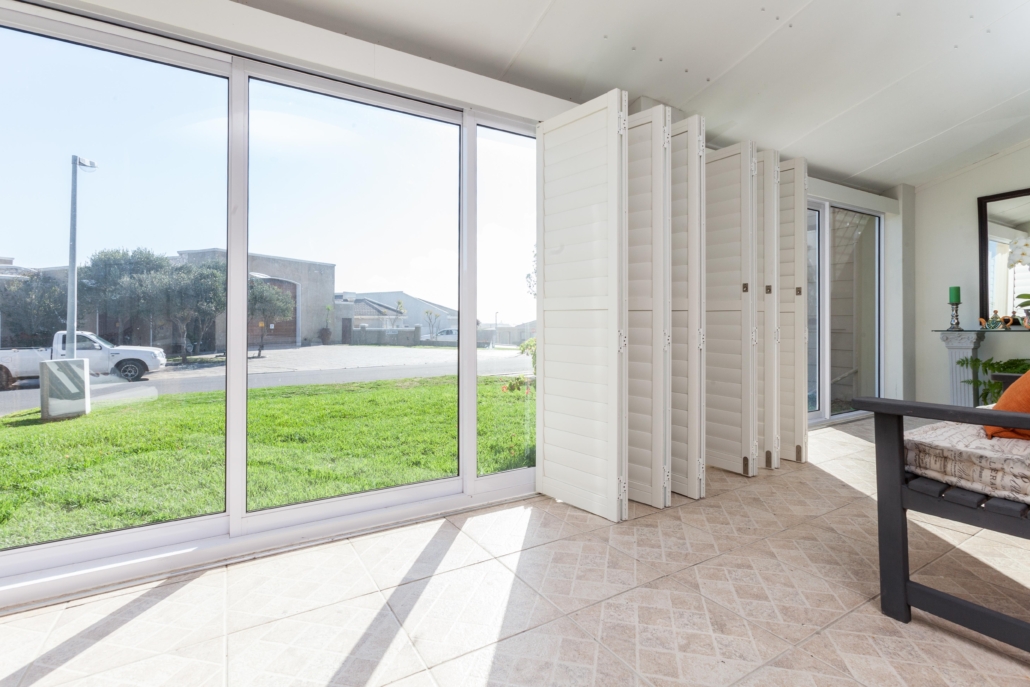
Will shutters block sliding door access?
Not when professionally designed. Quality sliding door shutter systems are engineered to maintain smooth access and efficient stacking while allowing doors to open and close comfortably.
The crucial factor is proper planning.
That includes:
- Correct panel sizing
- Track positioning
- Stacking configuration
- Opening direction
- Clearance allowances
Problems with sliding door access generally come from poor measuring and rushed layouts rather than the shutters themselves.
A meticulously planned setup allows the doors to slide freely without panels clashing, dragging, or stacking in inconvenient positions.
Common Problems and Solutions
| Problem | Better Solution |
| Panels too large | Split into multiple sections |
| Difficult stacking | Use bypass or bifold layouts |
| Heavy movement | Quality track systems |
| Blocked access | Proper clearance planning |
| Sagging panels | Strong aluminium construction |
The installation team matters enormously here.
Large-span shutters require precise alignment and engineering to operate smoothly long term.
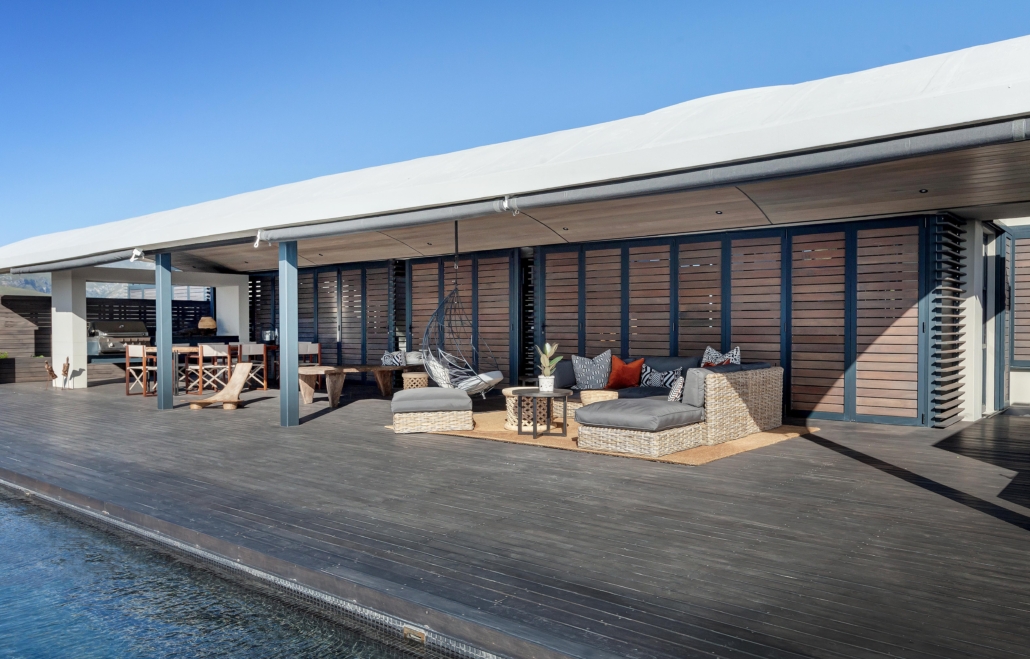
Best Shutters for Patio and Entertainment Areas
Sliding doors are most found in entertainment areas, which changes the performance requirements significantly.
These spaces usually need:
- Airflow
- Visibility
- Shading
- Weather resistance
- Durability
- Privacy
Aluminium shutters perform particularly well here because they tolerate:
- UV exposure
- Temperature fluctuation
- Outdoor humidity
- Heavy daily use
Best Shutter Recommendations by Space
| Area | Recommended System |
| Patio doors | Aluminium bypass shutters |
| Entertainment area | Bifold shutters |
| Coastal property | Powder-coated aluminium |
| Contemporary home | Tracked shutters |
| Security-sensitive home | Reinforced aluminium shutters |
Another advantage of shutters in entertainment spaces is flexibility.
Panels can remain partially open while still:
- Filtering harsh sunlight
- Improving airflow
- Softening glare
- Maintaining some privacy
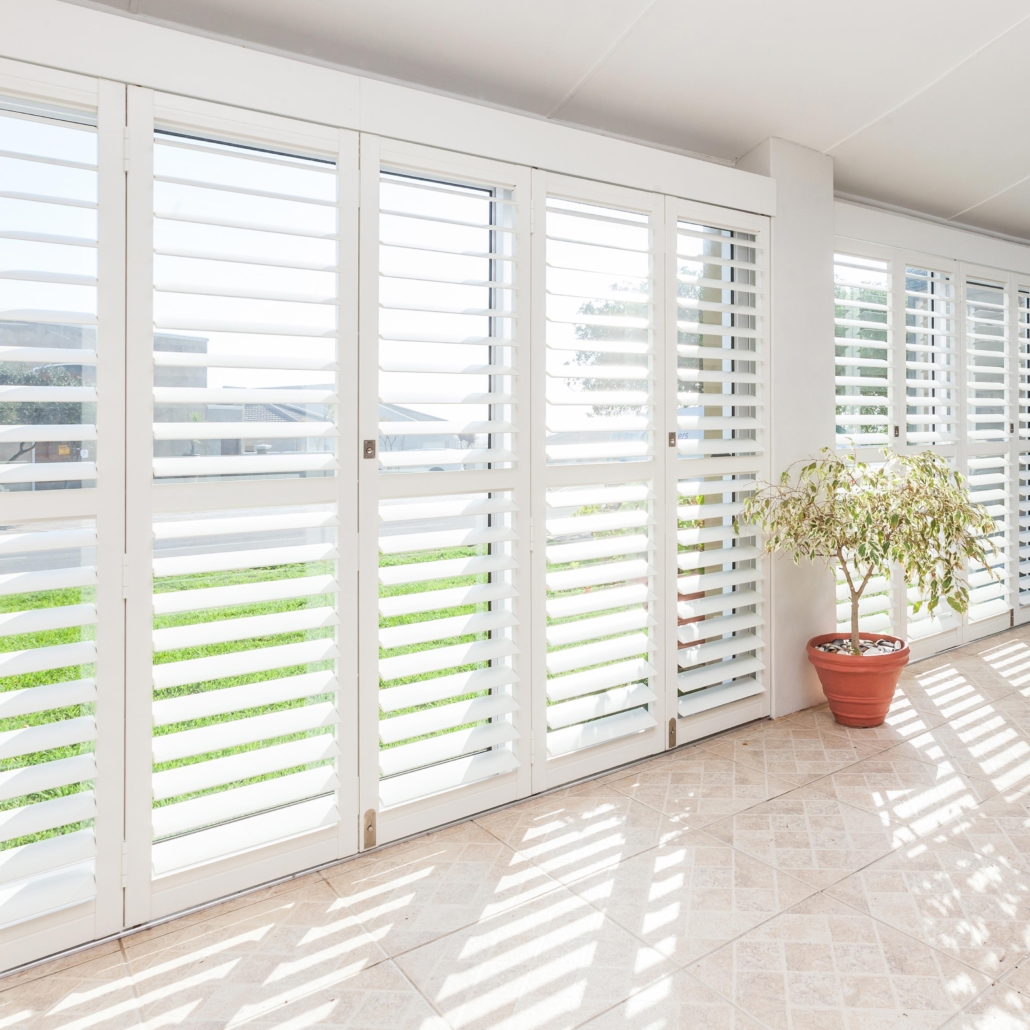
Heat Control and Energy Efficiency on Sliding Doors
Large glass openings are one of the biggest contributors to indoor heat gain. Without shading, sliding doors allow substantial:
- Solar radiation
- Glare
- UV exposure
- Temperature fluctuation
There is only so much uncovered glass can do during hotter months before rooms start becoming uncomfortable, which is where shutters tend to help.
Do shutters help with heat coming through sliding doors?
Yes. Adjustable louvre shutters are perfect for reducing the heat coming through sliding doors by blocking strong afternoon light yet allowing air to flow within.
Many homeowners use them to cut down on glare without making the living areas gloomy during the summer.
Shutters are commonly used in these areas:
- West-facing lounges
- Patio spaces
- Double-volume homes
- Entertainment rooms
Heat Control Benefits
| Benefit | Result |
| Reduced solar gain | Cooler interiors |
| Adjustable louvres | Flexible shading |
| Better insulation | Improved comfort |
| UV reduction | Protects furniture |
| Airflow control | Less trapped heat |
What I Would Recommend for Most Sliding Doors
For most South African homes, aluminium sliding door shutters provide the strongest long-term balance between:
- Durability
- Ease of use
- Light control
- Privacy
- Structural stability
What are the best shutters for sliding doors overall?
Overall, sliding doors are best matched with aluminium bypass shutters because they deal better with large glass spans and repeated use. Bifold shutters can still be a good call where the opening needs more flexibility than a standard track allows.
Practical Recommendations
| Situation | Best Recommendation |
| Large patio opening | Bifold aluminium shutters |
| Frequent daily use | Bypass shutters |
| Contemporary interior | Tracked plantation shutters |
| Coastal environment | Powder-coated aluminium |
| Security priority | Security-sensitive home shutters |
Most people focus on style first, then realise practical use changes the decision completely after installation. Bifold shutters suit wider door openings better, whereas bypass systems are usually preferred in homes with heavier day-to-day use.
Frequently Asked Questions
Are shutters suitable for large sliding doors?
Yes. Shutters are no longer limited to smaller windows or French doors. Bigger sliding openings can now use tracked configurations which allow the panels to stack or pass behind one another when opened.
What shutters work best for patio doors?
Bifold and bypass shutters are seen as the better fit for patio doors, especially in busy spaces where hinged panels become irritating after a while. Aluminium frames also deal with sunlight and temperature changes better than some heavier materials.
Do shutters block access to sliding doors?
A properly fitted shutter system allows the doors to glide without obstruction and without panels knocking against handles or frames. Older installations or badly aligned tracks are usually what causes access issues.
Are aluminium shutters better for large openings?
Aluminium shutters are usually the better option when covering wider spaces because the material handles weight and span pressure without warping as easily over time. Timber can start showing strain on bigger openings, especially in areas exposed to heat and moisture changes.
Can plantation shutters be used on sliding doors?
Yes. Plantation shutters can be installed over sliding doors without causing issues opening and closing them when the correct track system is used.
Do shutters help reduce heat on sliding doors?
Yes. Adjustable shutters help soften the sunlight coming through without closing everything off completely.
Are shutters better than curtains for sliding doors?
Yes. Shutters usually suit sliding doors better when privacy and durability are higher priorities than decoration. Curtains still suit certain interiors nicely, especially older homes, but they can start looking untidy once they are opened and closed constantly.
What is the difference between bypass and bifold shutters?
Bypass shutters are fitted onto tracks where one panel slides behind another, whereas bifold shutters fold back in pairs much like concertina doors. Choice depends on how much clearance is available around the window or doorway.
Are shutters suitable for outdoor patio areas?
Yes. Many people use aluminium shutters around patios and braai areas because they still allow airflow while giving the space a bit more cover during harsh weather.
Do sliding door shutters add value to a home?
They can. Estate agents regularly point to fitted shutters as one of those upgrades which helps a property photograph better online and present more cleanly in person. Value increases are rarely dramatic on their own, but presentation still plays a bigger role than many homeowners realise.

