TL;DR: There’s more to choosing shutters than picking the style you like. This guide looks at the most popular shutter types in South Africa, from security and wooden shutters, to aluminium, privacy, and bypass designs, and what each one is best suited to. We’ve also included a simple comparison of cost, security, privacy, and practicality, plus a few things worth asking before you buy. Our team at House of Supreme makes all these options to measure at our Johannesburg and Cape Town factories.
Shutters are louvred (angled slats) or solid panels fitted over windows and doors to control light, airflow, and privacy, with some types also built for security. Most South African homes ask a lot of their windows. They need to hold in cool air on a scorching day, keep harmful UV rays at bay, screen the street for privacy, and form part of the home’s security. At House of Supreme, we’ve custom-made shutters in our own factories since 1999, in aluminium, solid wood, and security-grade louvres reinforced with hardened steel.
Because every home and every opening is different, we’re here to walk you through each type of shutter, where it works best, what to check before you buy, and how to get the fit right the first time.
What Are Shutters, and Why Choose Them Over Blinds or Curtains?
Shutters are solid or louvred panels mounted over a window or door on a frame, hinge, or track. Where blinds and curtains are soft, moveable dressings, shutters are a rigid, built-to-measure fixture. That is what lets them control light and airflow, add privacy, and, in some ranges, security, while lifting the look and value of a home.
A well-made shutter is a permanent fixture that becomes part of the house, built to stand up to South African conditions. Shutters also pull their weight on your energy bill because they add an insulating layer that helps keep a room cooler in summer and warmer in winter. One peer-reviewed study of exterior shutters in a hot, sunny climate found they can cut the heat coming through a window by up to 50%, which takes a lot of strain off your HVAC system.
Here’s what a good set of shutters brings to a window:
- Durability: Built to handle sun, heat, and coastal air, and to keep working for years.
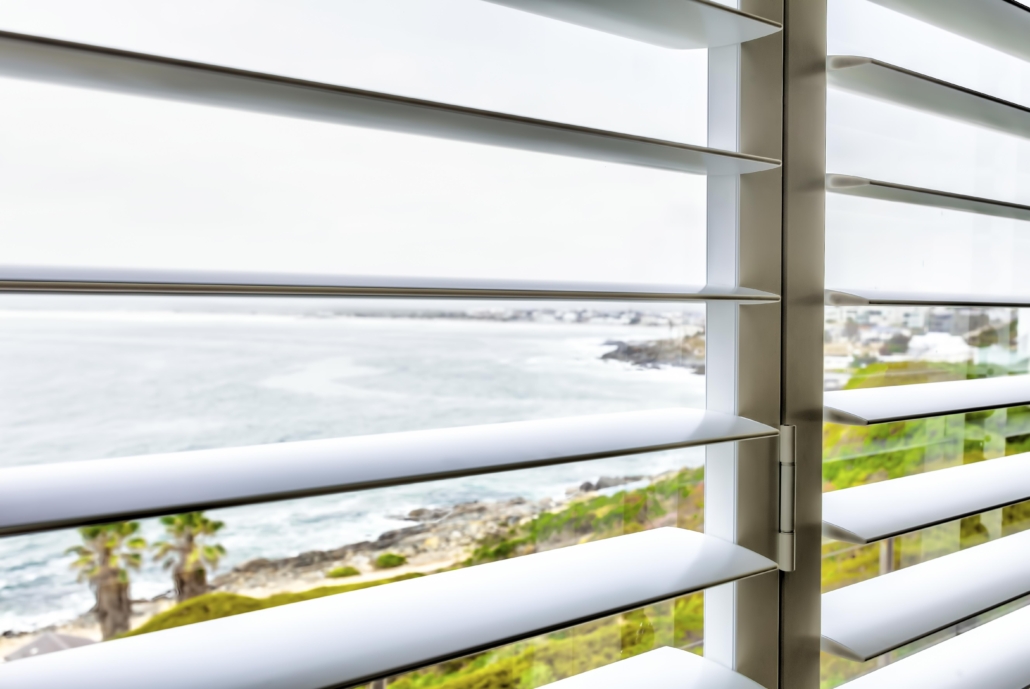
- Light and airflow control: Tilt the louvres to let in a breeze or block the glare, without opening the whole window.
- Privacy on demand: Angle the slats to screen the room from the street while keeping some view and light.
- Added security: Certain shutters double as an intruder barrier.
- Kerb appeal and value: As a permanent, custom finish, our range of shutters lifts the look of a home and factors into its perceived quality.
The Main Types of Shutters Explained
House of Supreme makes four shutter ranges, each suited to a different space or job. Here’s how they compare:
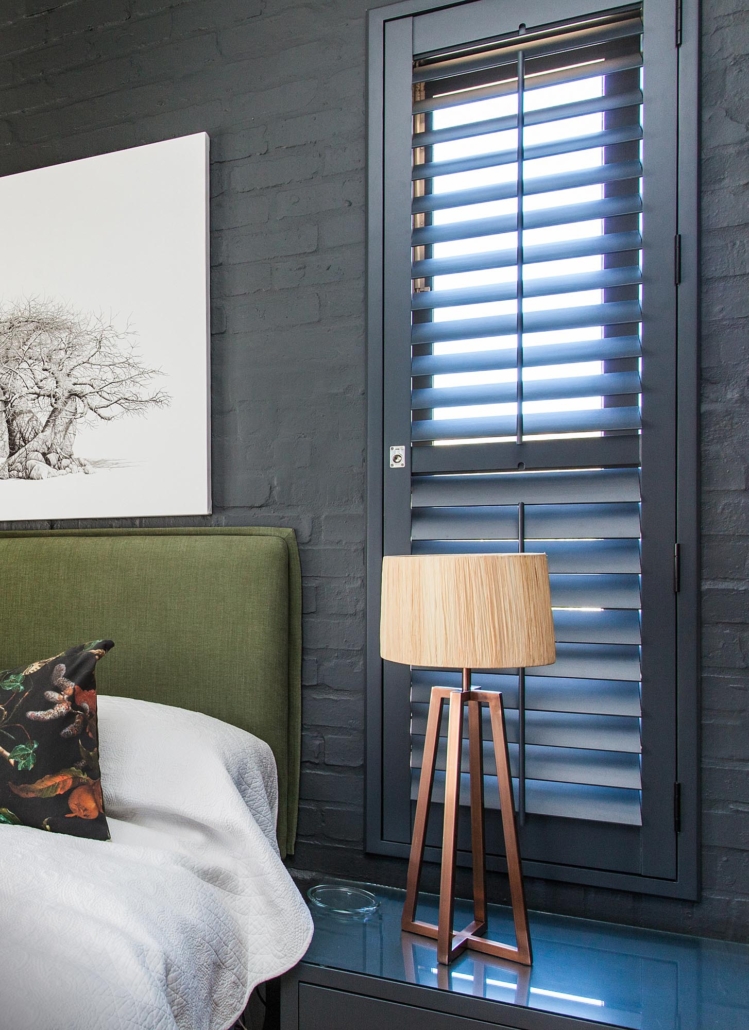
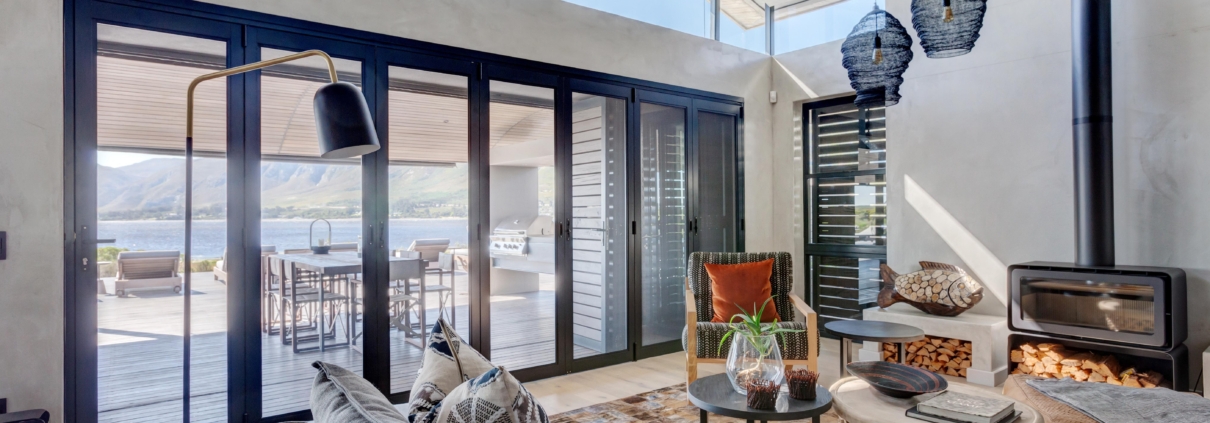
- Security shutters: Adjustable aluminium louvres reinforced with 100mm hardened steel rods and a Superior Locking System. They work as a strong, stylish alternative to burglar bars and gates, adding security, privacy, and value while still letting you control light and air.
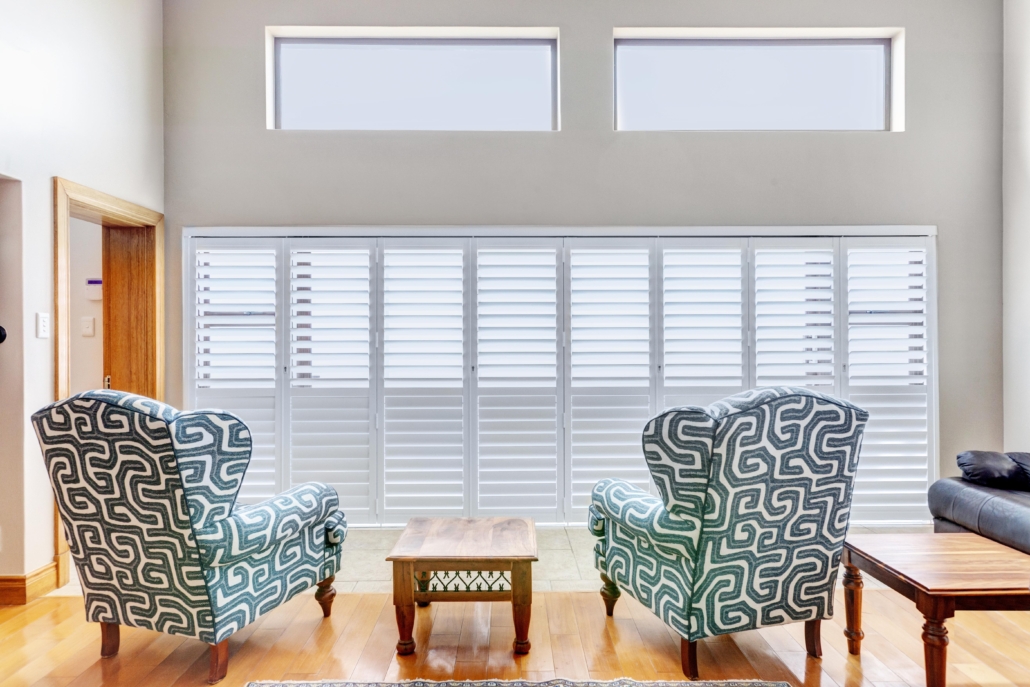
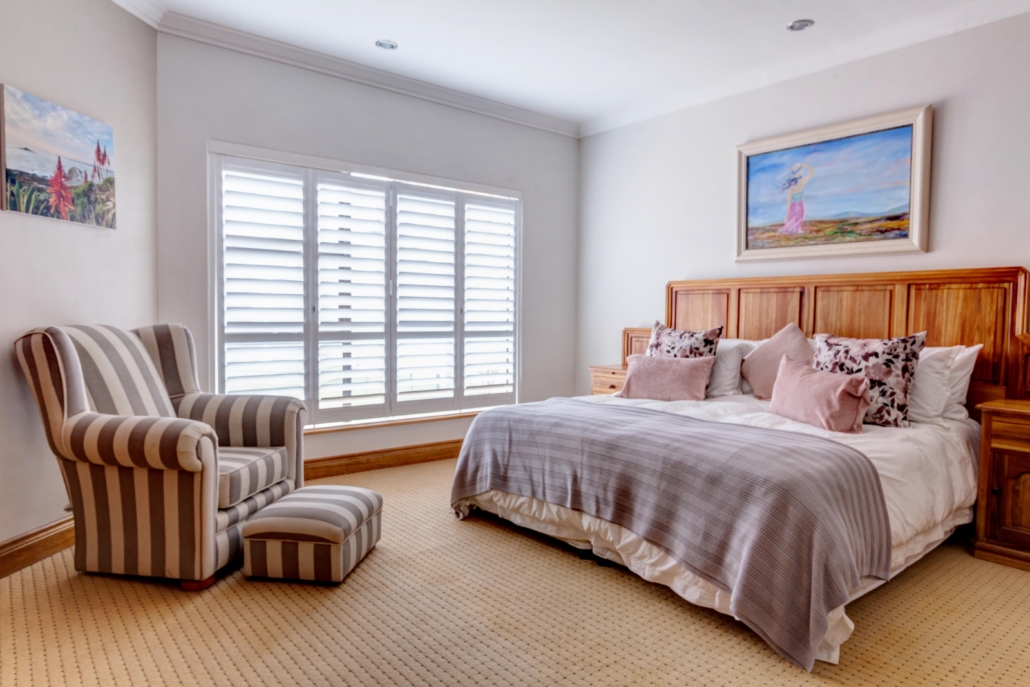
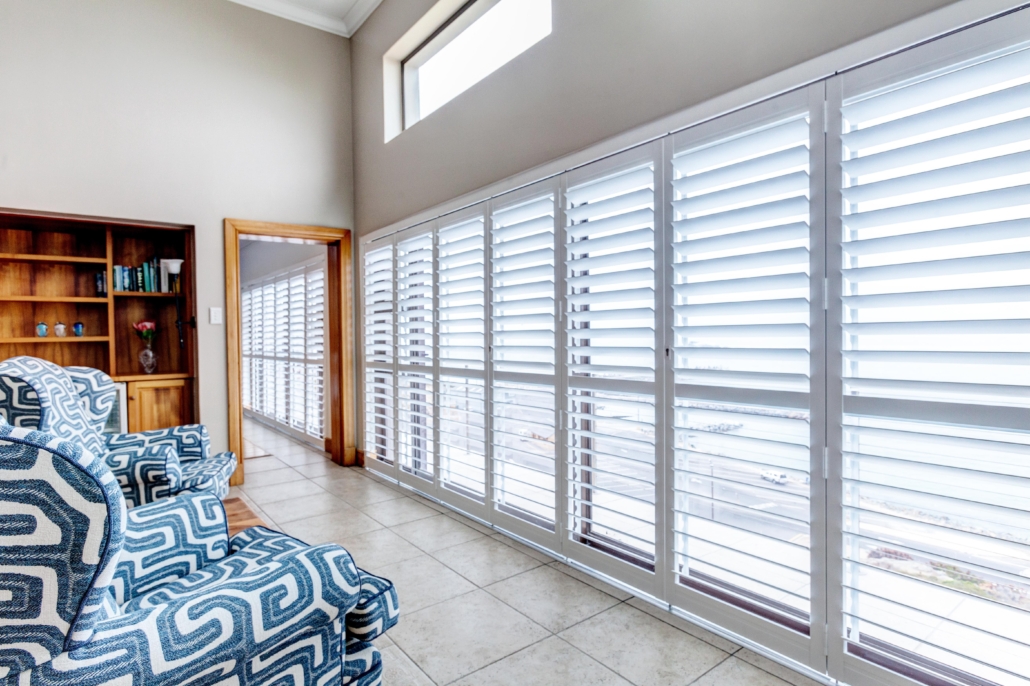
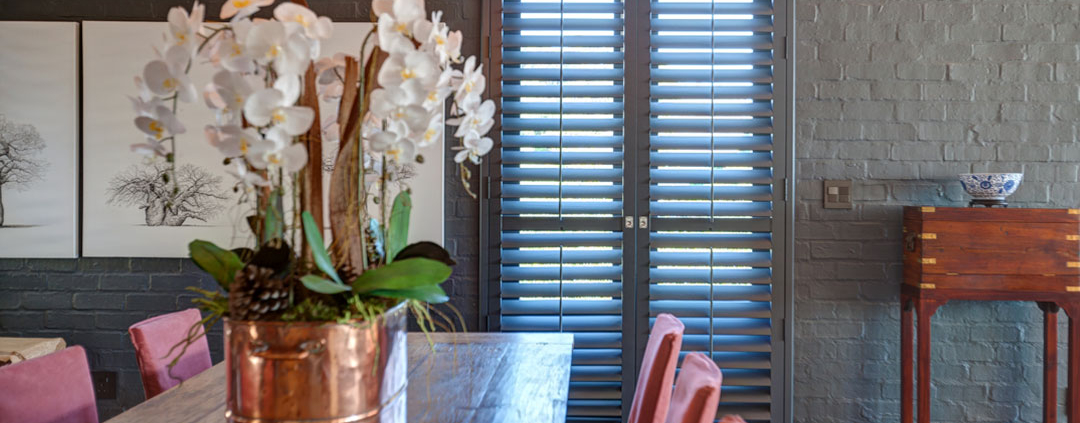
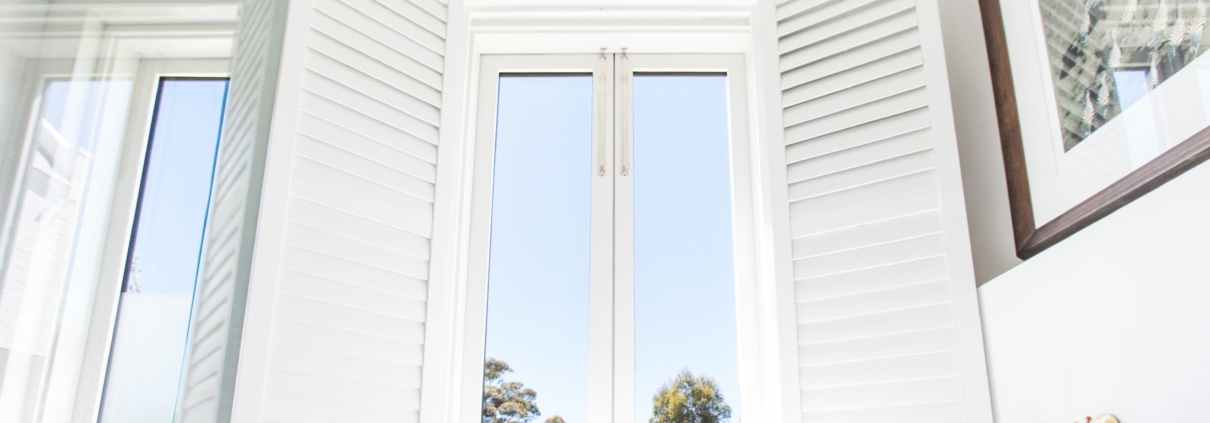
- Solid Wooden shutters: Custom-made adjustable shutters in solid wood, for interior use only. Made to order to suit your architecture and highlight window and door frames, they invite light in or block it out, and when closed, add privacy along with insulation from climate and noise. A statement in style rather than a security product, finished in natural wood grain, stained or painted.
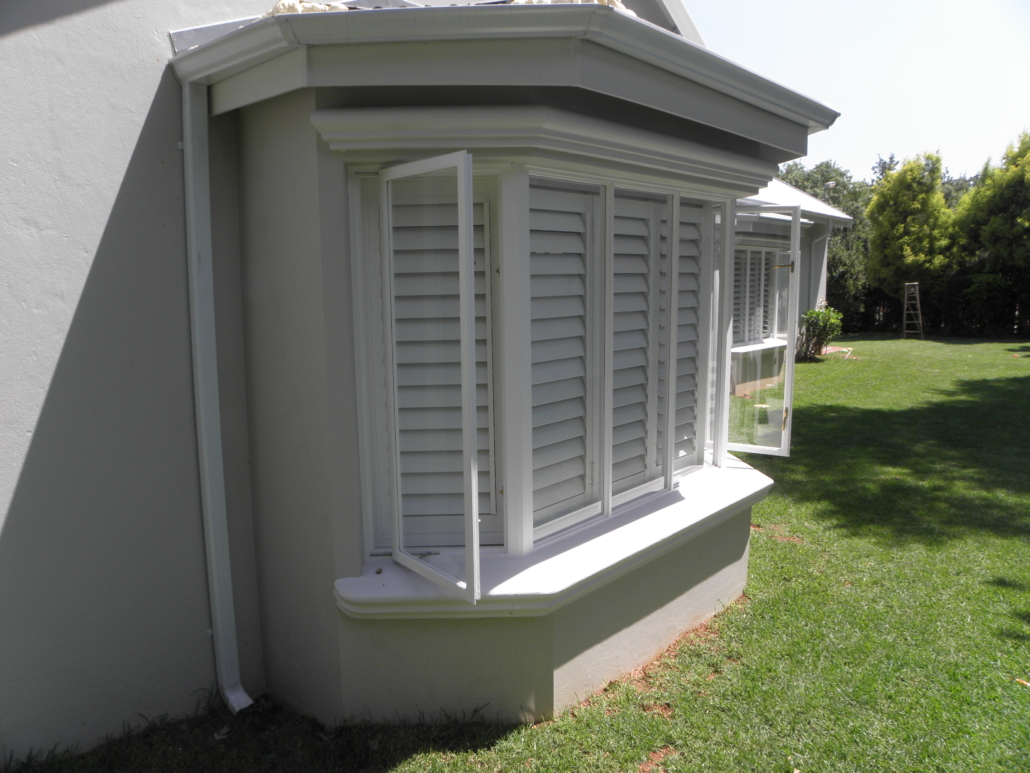
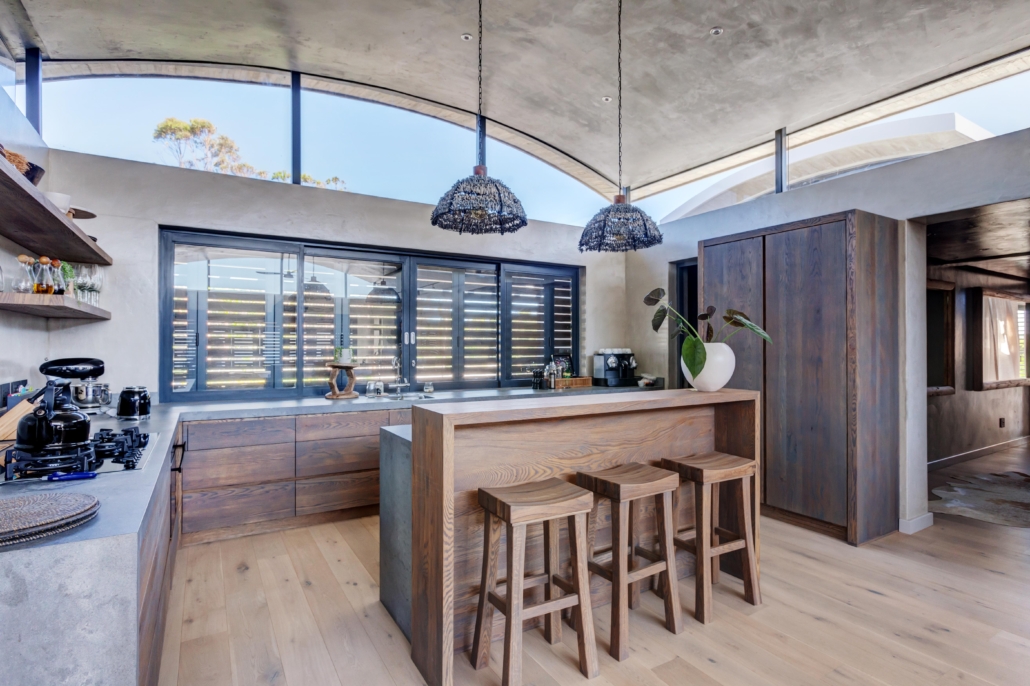
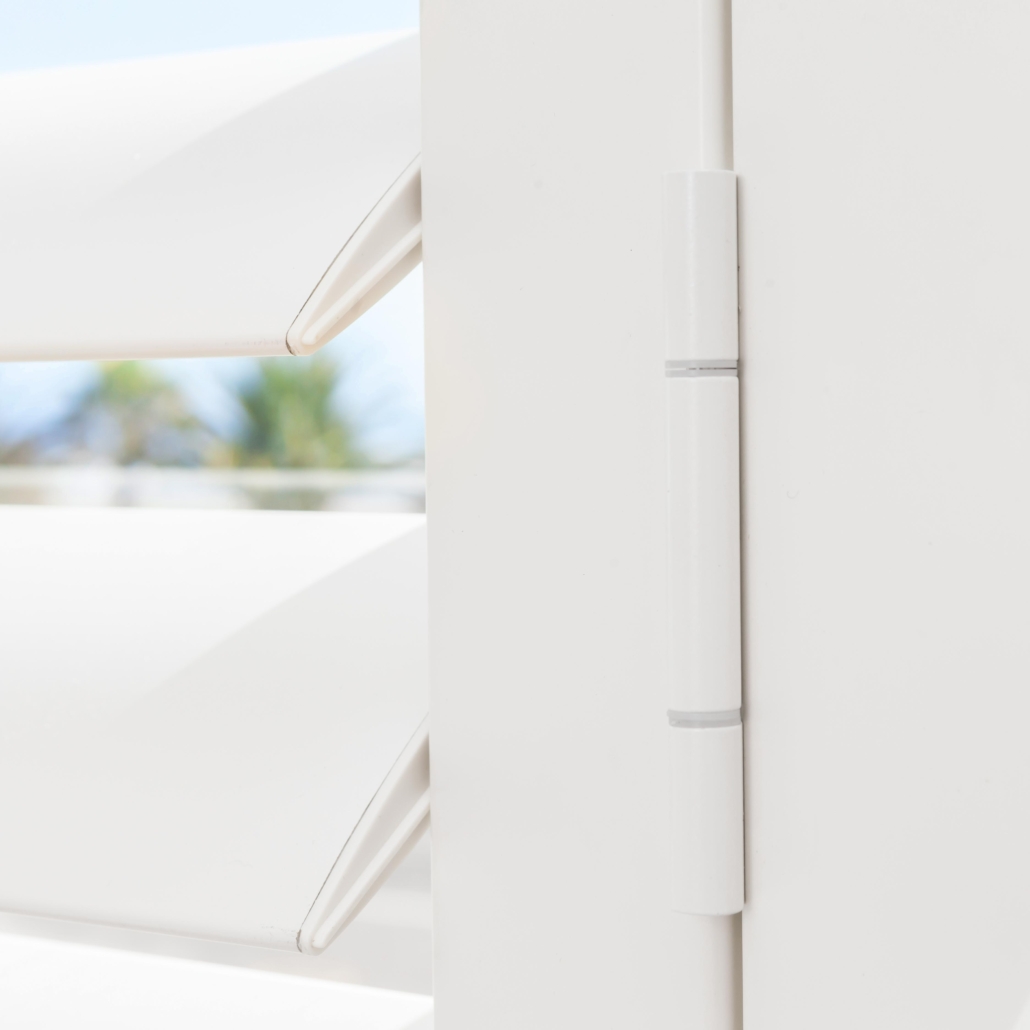
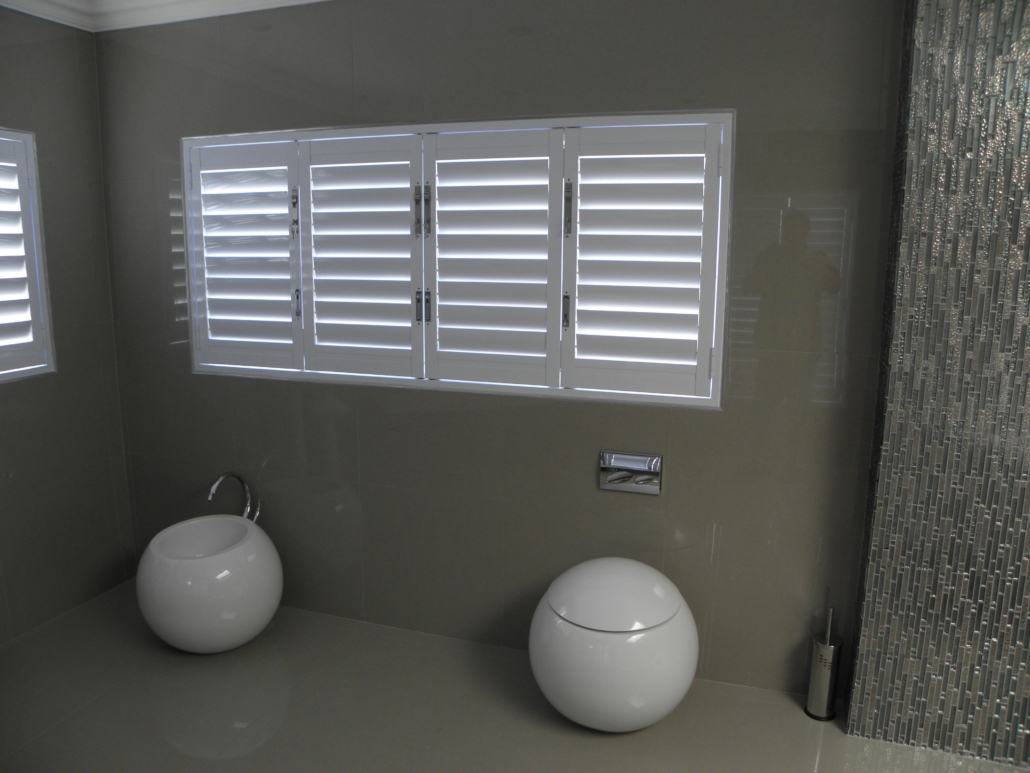
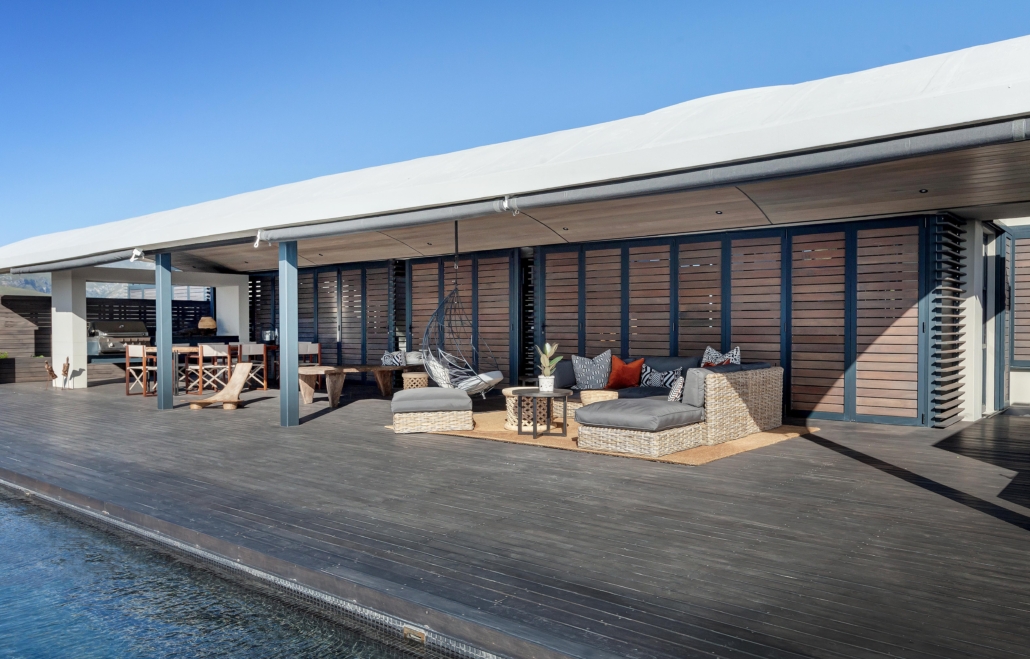
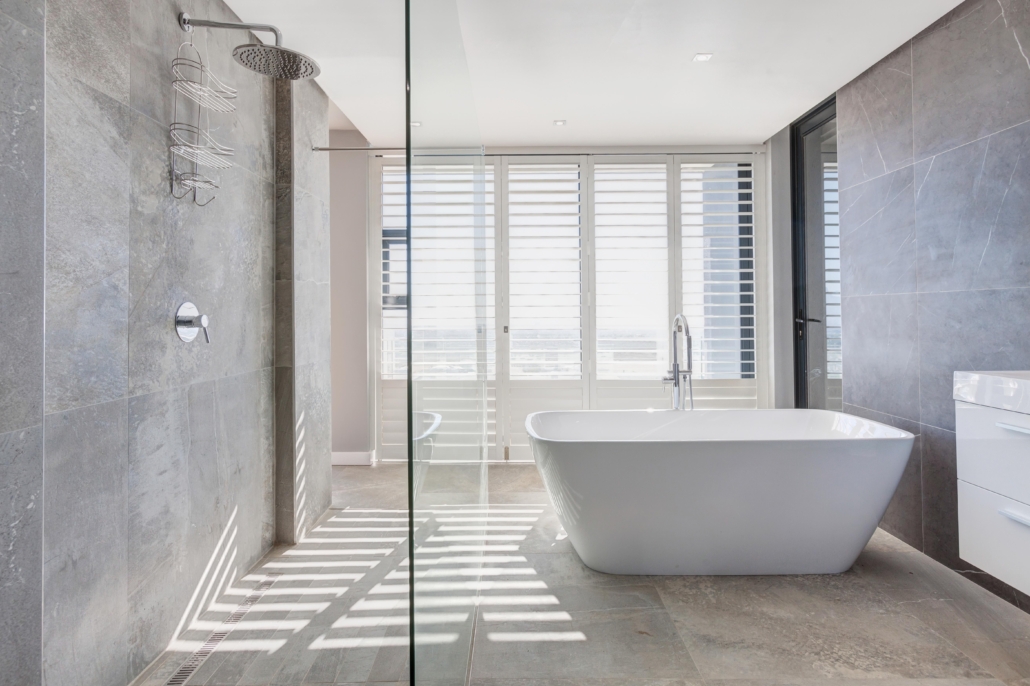
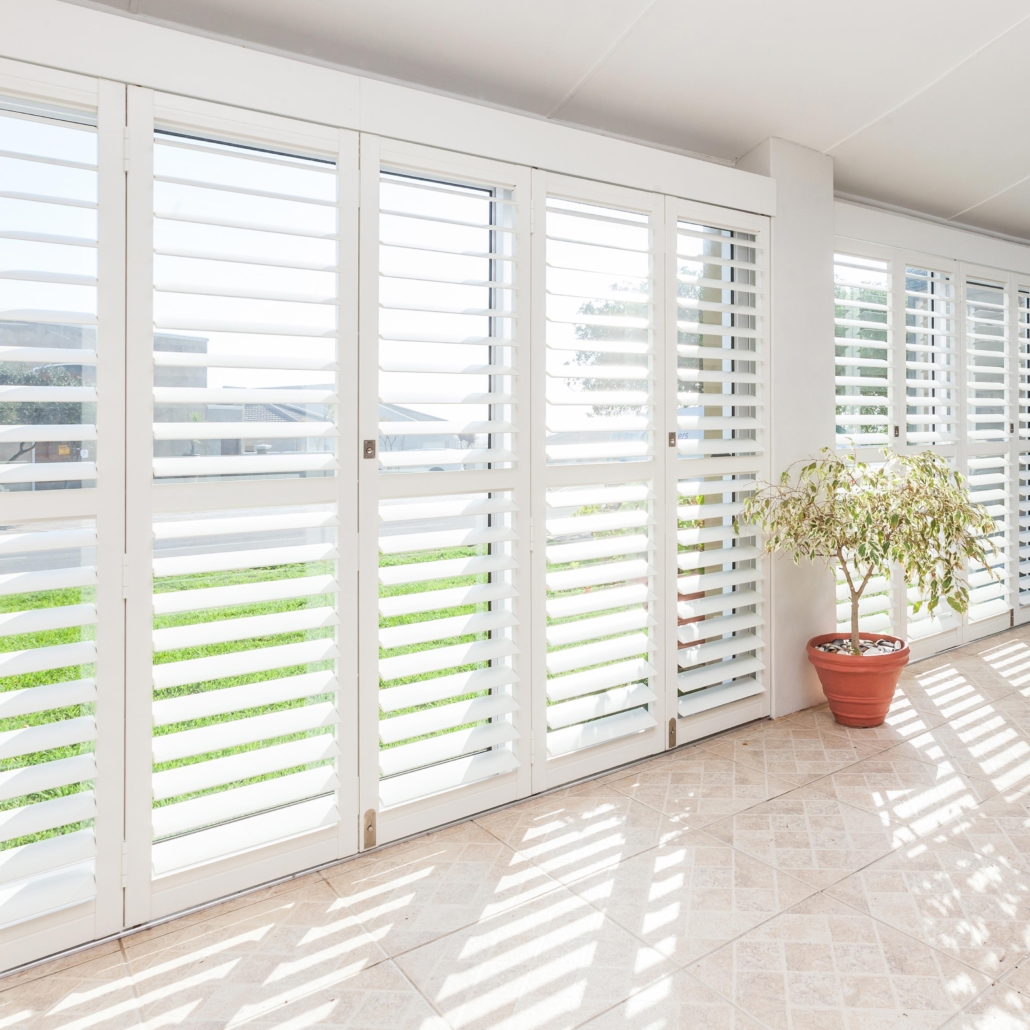
- Decorative Aluminium shutters: Custom-made adjustable shutters in 6063-T6 architectural-grade aluminium with a powder-coated, UV-resistant finish. Low-maintenance and corrosion-resistant for indoor and outdoor use, they control light, ventilation, and privacy, and suit bathrooms, patios, coastal homes, room dividers, and privacy screens.
- Hybrid Shutters: Our Hybrid Shutters offer a lighter security solution for customers who still want the strength and durability of aluminium, without the heavier full security features of our Security Aluminium Shutter range. Manufactured from strong, durable aluminium, Hybrid Shutters provide a reliable physical barrier while maintaining the clean and stylish look of our premium aluminium shutters.
They are an ideal choice for homes situated in security estates, complexes, and other properties where perimeter security is already in place, but where homeowners still want an added layer of protection, privacy, and peace of mind. Hybrid Shutters are designed to complement modern homes, combining durability, security, functionality, and contemporary aesthetics in one versatile solution. Hybrid Shutters are the smart middle ground between everyday shutters and full security protection.
Opening and Stacking Options: Hinged, Bi-Fold, Sliding, and Shaped (Wooden
The right opening style depends on the size and type of your window or door. These are your main options:
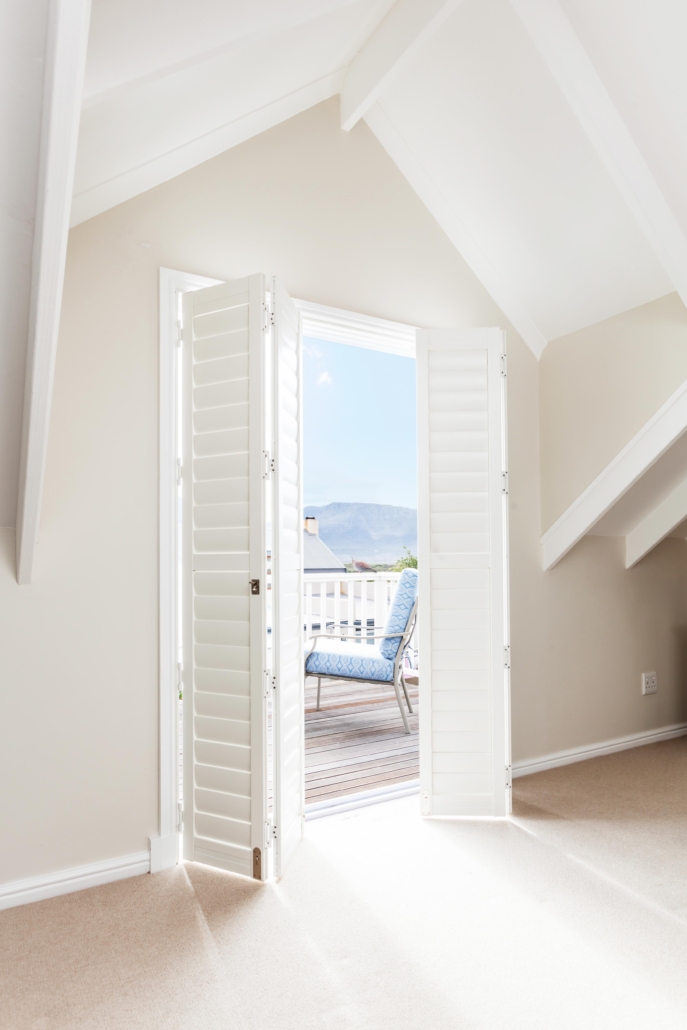
- Hinged: Panels swing open like a small door. Best for standard windows.
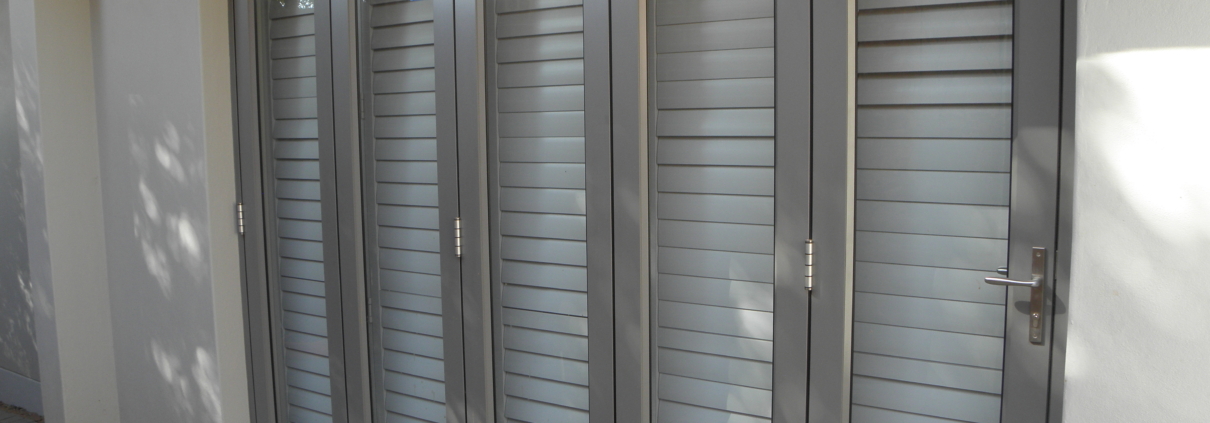
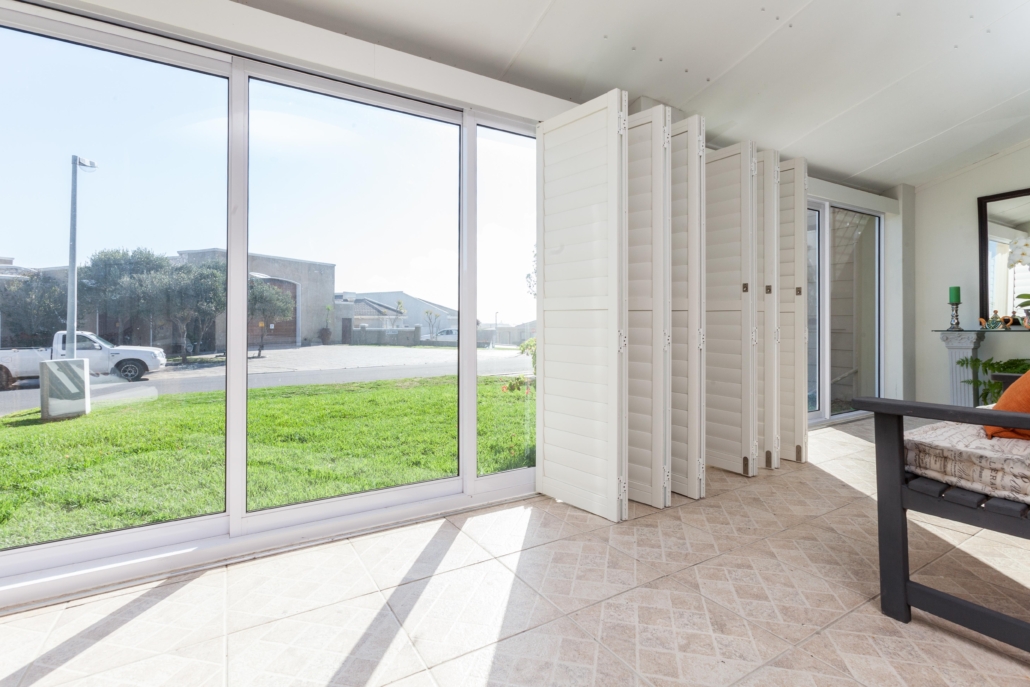
- Bi-fold (concertina): Panels fold back on themselves and stack to one side. Best for wide windows and doors where you want the opening clear.
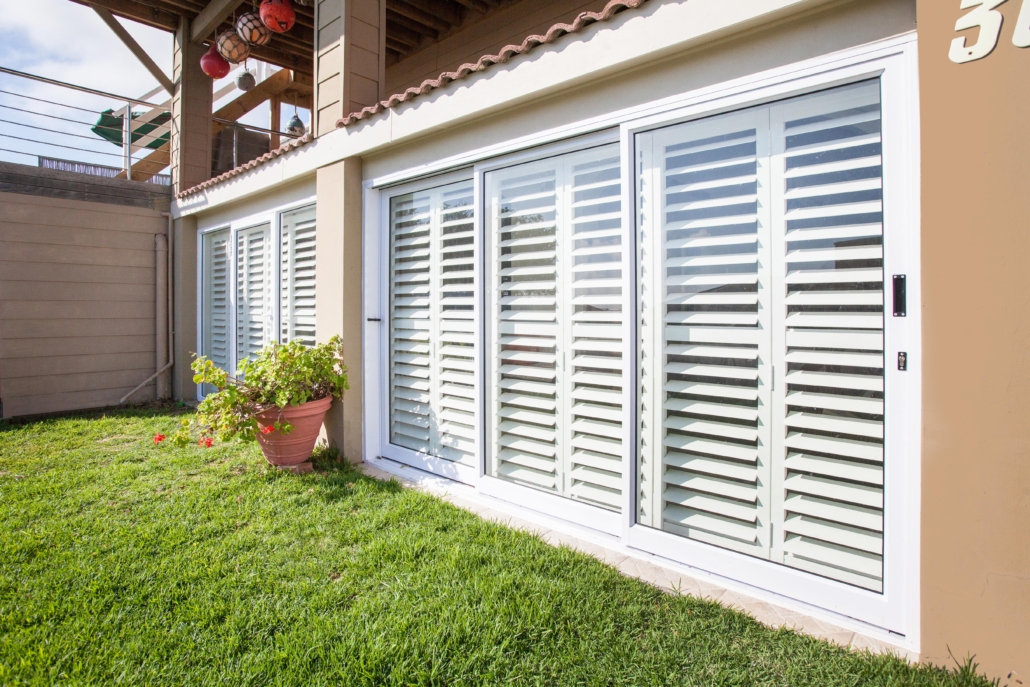
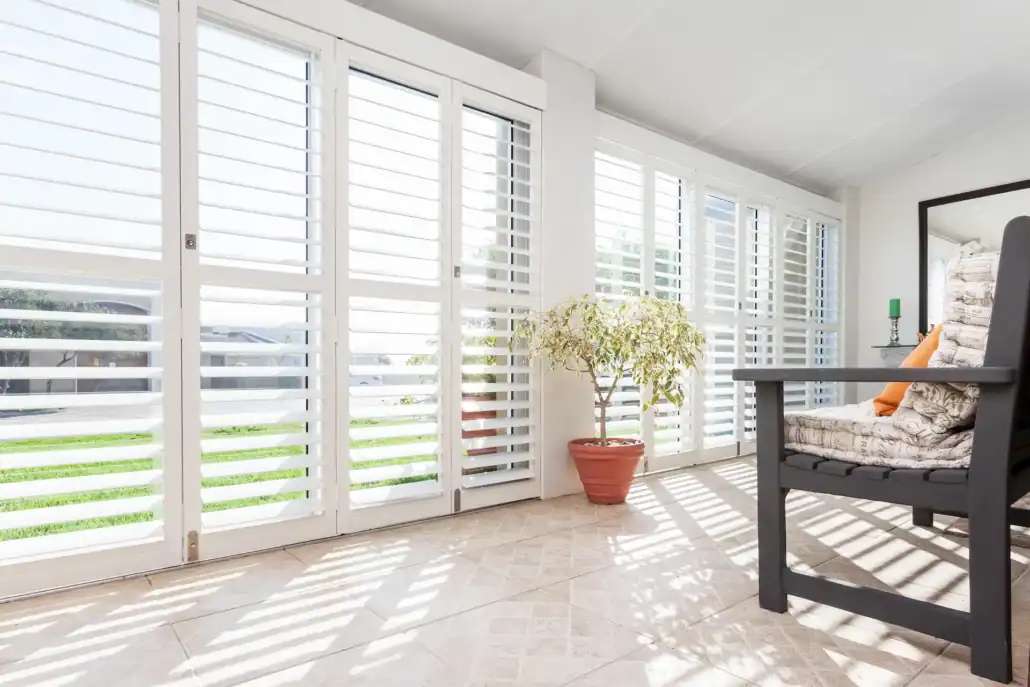
- Sliding or bypass: Panels glide along a track to cover or divide an opening without intruding into the room. Bypass is the multi-panel version, where two or more panels slide past one another. Best for patio doors, stacking doors, and wide openings.
- Shaped: Wooden panels are made to follow arches, gables, and other non-standard shapes.
For a normal window, hinged panels usually do the job, but we make any custom job possible based on your needs.
Which Shutter Is Right for You?
The right shutter comes down to what you need most. A few simple questions point you to the right choice:
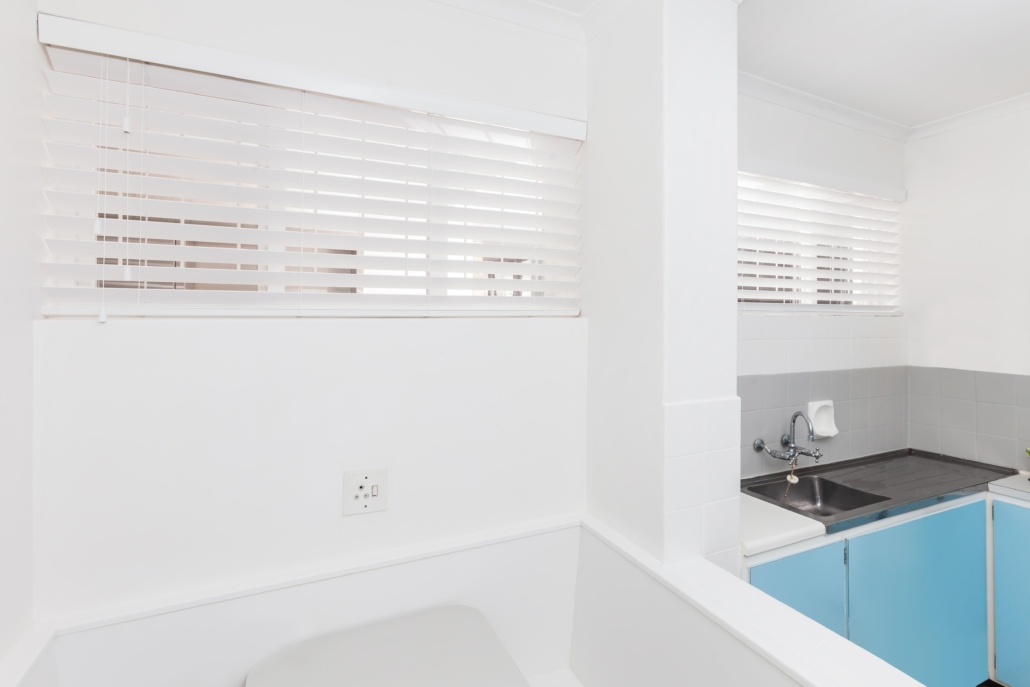
- Room: Living areas and bedrooms suit all types of shutters. High-moisture or outdoor spaces like patios, bathrooms, and kitchens suit aluminium designs.
- Location: Coastal and humid homes do best with corrosion-resistant aluminium (cleaning and maintenance is required); inland interiors can freely enjoy the warmth of wood.
- Security need: If the opening is a break-in risk, a security shutter is the one type built to resist forced entry.
- Opening type: Wide sliding doors and room dividers call for a bypass or bi-fold system.
Here’s how the main types compare:
| Shutter Type | Material | Security Level | Indoor / Outdoor | Best Use | Finish Options |
| Security | Aluminium with hardened-steel rods | High (intruder barrier) | Indoor and outdoor | Doors and windows with break-in risk | Powder-coated, wide colour range |
| Wooden | Solid wood | Low (style, not security) | Indoor only | Living areas and bedrooms | Stained or painted |
| Aluminium | Powder-coated aluminium | Low to moderate | Indoor and outdoor | Bathrooms, kitchens, patios, coastal homes, room dividers | Powder-coated, UV-resistant |
| Privacy & Bypass | Aluminium, wood or steel on a track | Low to moderate | Indoor and outdoor | Wide openings and room division | Matched to the panel material |
What to Look for Before You Buy
Not all shutters are made to the same standard. Before you buy, it’s important to ensure quality at every level:
- Reinforcement and locking: For security, look for steel-reinforced louvres and a proper locking system, not just a decorative panel.
- Custom fit: Irregular, arched, or oversized openings should be measured and made to fit, with no awkward gaps.
- Finish: Powder-coated, UV-resistant finishes hold their colour under harsh sun and resist coastal corrosion.
- Guarantee: A solid parts guarantee, like our 10 years with proper care, signals a maker that stands behind the product.
- Local manufacture: Locally made shutters mean easier measuring, faster fitting, and spares you can actually get if repairs are ever needed.
- Accurate measuring: A good installer measures from several reference points per opening. We use 12, so the fit is exact.
How Much Do Shutters Cost in South Africa?
Shutters in South Africa are priced per opening, so there’s no single fixed price. Cost depends on the size of the window or door, the material you choose, the finish, and how complex the fit is. Made-to-measure shutters are an investment rather than an off-the-shelf buy.
The main features that move the price are:
- Size and number of openings
- Material
- Panel count and opening style
- Uniquely shaped or oversized openings
Because every job is custom, House of Supreme quotes after a free, no-obligation assessment, measuring each opening from 12 reference points so the price reflects your exact windows. We invite you to request your free quote today.
The House of Supreme Difference
Shutters are a long-term fixture, so who makes them matters. House of Supreme has custom-made shutters in its own factories in Johannesburg and Cape Town since 1999, which means:
- In-house manufacturing: Every shutter is designed, constructed, and assembled in-house and built to your opening, with no standard sizing or off-the-shelf stock.
- Quality materials: We use premium materials like solid wood, architectural-grade 6063-T6 aluminium, and hardened-steel reinforcement, backed by a 10-year guarantee on parts.
- Nationwide reach: We do installations across Johannesburg, Cape Town, Durban, Nelspruit, and into Southern Africa, with sustainable factory practices along the way.
To see what option suits your windows, book your free quote and in-home consultation, and House of Supreme will offer you a bespoke solution.
Frequently Asked Questions
Q: What types of shutters are there?
A: The main types in South Africa are security shutters, wooden shutters, aluminium shutters, and privacy or bypass shutters. Security shutters act as an intruder barrier, wooden shutters add timeless style to indoor rooms, aluminium suits indoor and outdoor use, and privacy or bypass shutters divide space or dress wide sliding doors.
Q: Are security shutters as strong as burglar bars?
A: They can be. House of Supreme security shutters use aluminium louvres reinforced with 100mm hardened steel rods and a Superior Locking System, so they work as a superb intruder barrier. They also look far better than burglar bars, and let you control light and airflow, which fixed bars can’t do.
Q: Can shutters be fitted to odd-shaped windows?
A: Absolutely! Since every shutter is made to order, arched, gabled, and other non-standard openings are handled as part of the normal process.
Q: Are wooden or aluminium designs better?
A: It depends on the room. Wooden shutters bring warmth and a classic finish but are for indoor use only. Aluminium shutters are low-maintenance and handle both indoor and outdoor use, including bathrooms, patios, and coastal homes where moisture and salt air are a factor.
Q: How long does installation take?
A: From order to fitting, our team at House of Supreme works to an estimated four to six weeks. Events outside our control, like extended power outages or transport strikes, can occasionally push this out, but we keep you updated throughout.
Whether you’re securing your home, cooling a sun-facing room, or finishing a new build, the right shutter makes a lasting, beautiful difference. Talk to our team at House of Supreme today, and we’ll guide you through the right options.