

Interior vs Exterior Shutters: Which Is Right for Your Windows?
Interior vs Exterior Shutters: Which Is Right for Your Windows?
Choosing shutters is one of those decisions that looks simple at first. Then you stand in front of the actual window and realise there is more going on. The afternoon sun hits harder than expected. The neighbour has a clear view into the room. The patio door is wide, the handle sits in an awkward place, or the window shape is not quite standard.
That is where the choice between interior and exterior shutters starts to matter. Interior shutters sit inside the room. They help with privacy, light, airflow and the overall feeling of the space. Exterior shutters sit outside the window or door. They deal more directly with sun, weather, outdoor privacy and security.
Neither option is automatically better. A bedroom may need the soft control of interior shutters. A sliding patio door may need something stronger outside. A coastal home may need aluminium that can cope with exposed conditions. A quiet study may simply need better glare control without losing all the daylight.
At House of Supreme, we have been working with windows, doors, shutters, screens, blinds and awnings since 1999. Over the years, we have learned that the best solution is usually the one that feels obvious after it is fitted. It works properly, looks calm, and does not make daily life harder than it needs to be.
The Simple Difference
Interior shutters are fitted inside. Exterior shutters are fitted outside. That is the basic difference, but it affects almost everything about how they perform.
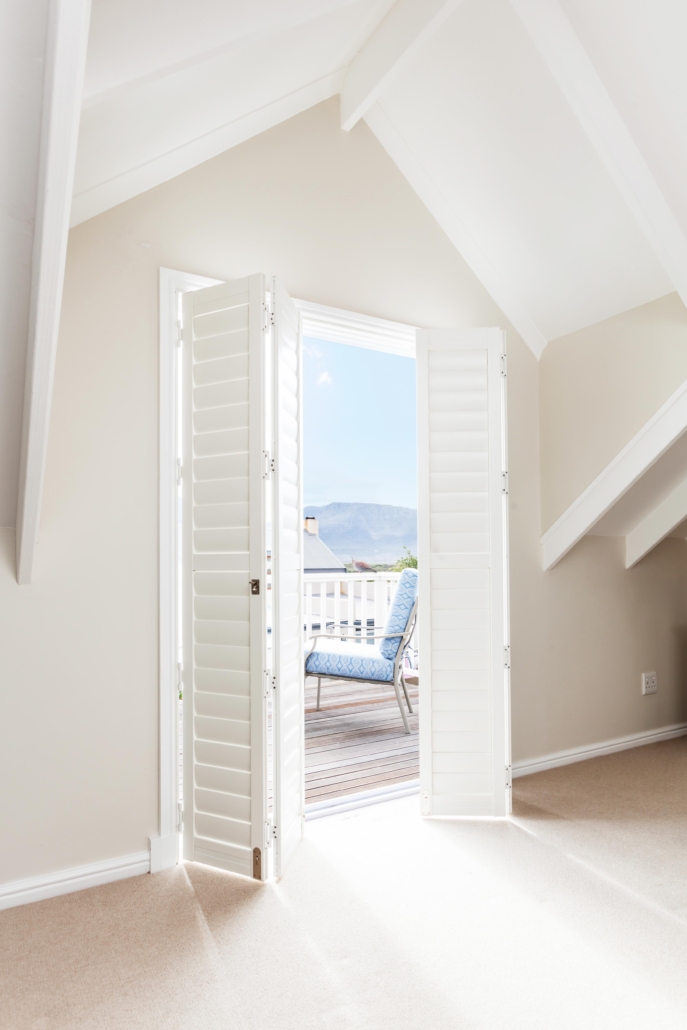
Interior shutters are more about the room. You adjust them while you are inside the space. They are useful when you want privacy, softer light, better airflow and a clean finish around the window. They suit bedrooms, bathrooms, lounges, dining rooms and studies because those are the places where comfort matters every day.
Exterior shutters work from the outside in. They are better when the problem starts before the light or heat reaches the glass. They can shade a hot window, screen a patio, protect a large opening and add a stronger architectural look to the building. When they are made from aluminium and fitted with the right hardware, they can also add a useful security layer.
A good way to think about it is this: if you are trying to improve the feeling inside the room, look at interior shutters first. If you are trying to protect or control the opening from outside, exterior shutters probably deserve the first look.
| Question | Interior Shutters | Exterior Shutters |
|---|---|---|
| Where do they sit? | Inside the room | Outside the window or door |
| What are they best at? | Privacy, light and room comfort | Sun, weather, security and outdoor privacy |
| Where do they work well? | Bedrooms, bathrooms, lounges and studies | Patios, balconies, sliding doors and exposed windows |
| Which is easier to adjust? | Interior shutters are usually easier from inside | Exterior shutters depend on the system |
| Which helps more with heat? | Good for glare and indoor comfort | Often better because they shade before the glass heats up |
| Which helps more with security? | Not usually the main security option | Better when aluminium, lockable and properly fitted |
FAQ: What is the main difference between interior and exterior shutters?
Interior shutters are fitted inside the room and help with privacy, light and comfort. Exterior shutters are fitted outside and are better for sun control, weather exposure, outdoor privacy, security and the outside look of the building.
FAQ: Can you use both interior and exterior shutters?
Yes. Many homes use interior shutters in bedrooms or living spaces and exterior shutters on patios, balconies or exposed doors. It can work beautifully when the colour, material and proportions are planned together.
When Interior Shutters Make Sense
Interior shutters are a good fit when the room itself needs more control. Maybe the bedroom faces the road. Maybe the lounge gets too much glare in the afternoon. Maybe the bathroom needs privacy without heavy curtains. These are the everyday problems interior shutters solve well.
The nicest thing about interior shutters is that they give you options without much effort. You can angle the louvres for privacy and still keep the room bright. You can open the panels when you want the full view. You can close them when the room needs to feel quieter or more private.
They also make a room feel more finished. Unlike fabric that hangs loose or blinds that can look temporary, shutters feel built in. Solid wooden shutters add warmth and character. Aluminium shutters bring a cleaner, more modern line. The right choice depends on the room, the light, the moisture level and the look you want to live with for years.
| Room | Why Interior Shutters Work | What to Check |
|---|---|---|
| Bedroom | They give privacy and help the room feel calm | Check light gaps and closure |
| Bathroom | They give privacy without heavy fabric | Use a moisture-suitable material |
| Living room | They soften glare and look neat | Plan the panels around furniture |
| Study | They help with screen glare and focus | Choose louvres that adjust easily |
| Dining room | They add polish without making the space busy | Match the finish to the room |
FAQ: Are interior shutters good for privacy?
Yes. Interior shutters are very good for privacy because the louvres can be angled to block direct views while still letting light in. They are especially useful in bedrooms, bathrooms and rooms facing the street.
FAQ: Do interior shutters make a room dark?
Not if they are used well. Adjustable louvres allow daylight to come through while reducing glare and visibility. The final feel depends on the colour, window direction, louvre size and how often the panels are opened.
When Exterior Shutters Are the Better Fit
Exterior shutters are worth considering when the issue is outside the glass. A hot west-facing window, an exposed patio, a balcony facing neighbours or a large sliding door can all benefit from control on the outside.
Because exterior shutters sit outside, they can reduce sun before it reaches the glass. That can make a real difference in hot rooms. Interior coverings can soften glare after the fact, but exterior shutters help earlier in the process.
They also help with outdoor privacy. A patio can feel too open even before anyone looks through the doors. Exterior shutters create a boundary that still allows air and light to move through, depending on the design.
Security is another reason people choose exterior shutters, especially aluminium shutters. A lockable exterior shutter can add a physical layer across windows and doors. That is especially useful for sliding doors, patios and exposed openings.
| Situation | Why Exterior Shutters Help | Good Material Choice |
|---|---|---|
| Hot afternoon sun | They shade the glass before heat builds up | Aluminium |
| Patio facing neighbours | They create privacy without closing the area completely | Aluminium or suitable treated timber |
| Large sliding door | They can add shade, privacy and security | Lockable aluminium |
| Coastal home | They need to cope with outdoor exposure | Exterior-grade aluminium |
| Business frontage | They add privacy and protection while keeping a clean look | Aluminium security shutters |
FAQ: Are exterior shutters only decorative?
No. Some exterior shutters are decorative, but functional exterior shutters can slide, close, lock, shade and protect. If you need performance, make sure the product is designed for daily use and not just for appearance.
FAQ: Are exterior shutters good for hot windows?
Yes. Exterior shutters can be very useful on hot windows because they reduce direct sun before it reaches the glass. This is often more effective than dealing with heat once it is already inside the room.
Interior vs Exterior Shutters Compared
The fairest comparison is not about which shutter is better in every situation. It is about what the opening needs. A bathroom window, a patio door and a street-facing lounge window do not have the same job.
Interior shutters usually win when the priority is privacy, glare control and interior style. Exterior shutters usually win when the priority is security, heat, weather or outdoor privacy. In some homes, using both is the most sensible answer.
| Feature | Interior Shutters | Exterior Shutters | Usually Better |
|---|---|---|---|
| Bedroom privacy | Strong | Helpful if security is also a concern | Interior |
| Outdoor privacy | Limited | Strong | Exterior |
| Light control | Very precise | Good for harsh sun | Depends on the window |
| Heat control | Good indoors | Often stronger before glass heats up | Exterior |
| Security | Limited unless specially designed | Strong when lockable | Exterior |
| Interior design | Strong effect | Less direct effect inside | Interior |
| Facade design | Minimal | Strong effect | Exterior |
| Cleaning access | Usually simple | Depends on height and exposure | Interior |
FAQ: Which shutters are better for bedrooms?
Interior shutters are usually better for bedrooms because they are easy to adjust from inside and give strong privacy. Exterior shutters may be useful too if the bedroom window has heat, security or exposure concerns.
FAQ: Which shutters are better for patios?
Exterior aluminium shutters are often better for patios because they can help with sun, outdoor privacy and security. Sliding or bypass systems work especially well when the patio opening is wide or used often.
Privacy, Light and Airflow
This is where shutters become part of daily life. Most people do not want a room that is either fully open or completely shut down. They want something in between. Privacy without darkness. Light without glare. Airflow without feeling exposed.
Interior shutters are excellent for this. A small adjustment to the louvres can change the whole room. You can keep the light soft, block direct views and still let air move through the space.
Exterior shutters are useful when privacy needs to happen outside the glass. This is often the case on patios, balconies and large doors. They create a more comfortable edge between the home and the outside world.
| Need | Best Direction | Why |
|---|---|---|
| Bedroom privacy | Interior | Easy to adjust whenever needed |
| Bathroom privacy | Interior | Blocks views without heavy fabric |
| Patio privacy | Exterior | Creates a screen outside the glass |
| Soft daylight | Interior | Filters light neatly |
| Airflow with coverage | Louvred shutters | Allows ventilation while still giving privacy |
| TV glare | Interior | Quick to adjust from inside the room |
FAQ: Can shutters give privacy without blocking light?
Yes. Adjustable louvres can block direct views while still allowing natural light into the room. This is one of the main reasons people choose shutters over curtains in bedrooms, bathrooms and living spaces.
FAQ: Are shutters better than blinds for airflow?
Shutters can be better than many blinds for airflow because the louvres sit in a strong, stable frame. They can stay partly open for ventilation while still keeping the window neat and controlled.
Security and Weather Protection
If security is the main concern, exterior shutters are usually the better place to start. They sit in front of the glass. That means they add a layer before the window or door is reached.
This is especially important on large glass doors. Sliding patio doors, balcony doors and commercial openings can feel exposed. A lockable aluminium shutter system can make those openings feel more secure without making them look heavy or harsh.
Exterior shutters can also help with weather and sun exposure. They can soften wind, reduce direct sun and protect the opening from some outdoor conditions. In coastal areas, aluminium is often the practical choice because it is stable and easier to maintain outside.
| Concern | Better Option | Why | Important Detail |
|---|---|---|---|
| Large glass door | Exterior aluminium shutters | Adds protection before the glass | Tracks and locks must be right |
| Coastal exposure | Exterior-grade aluminium | Handles outdoor conditions better | Finish and hardware matter |
| Street-facing window | Depends on the risk | Privacy may be enough, or security may be needed | Check access from outside |
| Strong afternoon sun | Exterior shutters | Reduces heat before it enters | Louvre angle matters |
| Business premises | Exterior security shutters | Supports privacy and protection | Daily use must stay easy |
FAQ: Are exterior shutters better for security?
Exterior shutters are generally better for security when they are aluminium, lockable and properly installed. They create a physical layer outside the glass, which is useful for patios, sliding doors and exposed windows.
FAQ: Can shutters help with harsh weather?
Functional exterior shutters can help reduce direct sun, wind and some weather exposure. Their performance depends on the material, finish, installation and whether the shutter has been designed for outdoor conditions.
Aluminium vs Solid Wooden Shutters
The material changes the whole decision. Aluminium and solid wood both have their place, but they are not the same product in daily use.
Aluminium is practical, strong and well suited to exterior shutters, security shutters and larger openings. It is often the better choice for patios, coastal homes, sliding doors and outdoor applications. It also suits modern interiors where a clean line is wanted.
Solid wood feels warmer. It brings texture and character into a room. It works beautifully in bedrooms, lounges, studies and protected interiors where the aim is comfort and style rather than outdoor performance.
If the shutter has to face sun, wind, moisture, heavy use or security pressure, aluminium usually makes more sense. If it will sit indoors and the room needs warmth, solid wood may be the better fit.
| Material Factor | Aluminium Shutters | Solid Wooden Shutters |
|---|---|---|
| Best use | Exterior, security, large openings and modern interiors | Protected interiors and warmer design schemes |
| Outdoor suitability | Strong when exterior-grade | Needs careful treatment and maintenance |
| Style | Clean and architectural | Warm and natural |
| Maintenance | Low to moderate | Moderate, depending on exposure |
| Security use | Strong when lockable | Not usually the first choice |
| Large openings | Very suitable with the right system | Possible, but weight and movement matter |
FAQ: Are aluminium shutters better than wooden shutters?
Aluminium shutters are better for exterior use, large openings and security needs. Wooden shutters are better when the main goal is warmth, natural texture and interior character. The best choice depends on the space.
FAQ: Can wooden shutters be used outside?
Wooden shutters can be used outside only when the timber, finish and exposure conditions are suitable. In harsh sun, moisture or coastal air, aluminium is usually more practical and easier to maintain.
Windows, Sliding Doors and Awkward Openings
A shutter can only work properly if it fits the opening properly. This is where many problems start. The window may not be square. The door may need space to slide. The handle may sit exactly where the panel wants to move.
Standard windows often work well with hinged shutters. Sliding doors usually need sliding or bypass systems. Bifold openings need careful planning because both the doors and shutters need space to stack. Odd-shaped windows need accurate measuring and manufacturing because small mistakes are easy to see.
This is why custom work matters. A shutter that almost fits will always feel like it almost fits. A made-to-fit shutter feels easier from the first day.
| Opening Type | Likely Shutter Solution | Key Detail |
|---|---|---|
| Standard window | Interior hinged shutter | Check reveal depth and handle position |
| Sliding door | Sliding or bypass shutter system | Track placement must keep access easy |
| Bifold opening | Custom panel layout | Allow for stacking and movement |
| Oversized door | Aluminium shutter system | Frame strength and panel weight matter |
| Odd-shaped window | Custom-shaped shutter | Templates and proportions are critical |
| Patio opening | Exterior aluminium shutters | Plan for locks, weather and traffic flow |
FAQ: Can shutters be fitted to sliding doors?
Yes. Shutters can be fitted to sliding doors when the system is designed around the door movement, track position and access route. Sliding and bypass shutters are often the most practical options.
FAQ: Can shutters be made for odd-shaped windows?
Yes. Custom shutters can be made for angled, arched, oversized and unusual windows. Accurate measuring and experienced manufacturing are important because small errors become very visible on non-standard openings.
Cost, Maintenance and Lifespan
Shutters usually cost more than basic blinds or curtains because they are more permanent and often custom-made. The price depends on size, material, hardware, finish, installation and whether the shutter needs to provide security or exterior performance.
Exterior shutters can cost more when they need stronger frames, locks, tracks and weather-ready finishes. Interior shutters can also become a larger investment if the opening is wide, unusual or made up of several panels.
Maintenance is mostly about choosing the right product for the right place. Aluminium is generally easier to live with outdoors and in high-use areas. Solid wood needs more care, especially around moisture. Both can last for years when they are properly made and fitted.
| Factor | Why It Matters | What Helps |
|---|---|---|
| Opening size | Larger openings need more material and support | Measure before comparing options |
| Material | Aluminium and wood behave differently | Match material to exposure |
| Security hardware | Locks and stronger systems add cost | Use them where protection is needed |
| Exterior exposure | Outdoor shutters need durable finishes | Choose exterior-grade materials |
| Custom shape | Needs more design and production work | Worth it for unusual windows |
| Installation | Complex openings take longer to fit | Plan before manufacturing starts |
FAQ: Are shutters more expensive than blinds?
Shutters are usually more expensive than basic blinds because they are stronger, more permanent and often custom-made. Their value comes from durability, better control, cleaner design and long-term daily use.
FAQ: How long do quality shutters last?
Quality shutters can last for many years when the material and installation suit the environment. Aluminium is especially durable outdoors, while solid wood performs well indoors with sensible care and protection from moisture.
Why Custom-Made Shutters Matter
Custom-made shutters matter because real openings are rarely perfect. Walls can lean slightly. Frames can sit out of square. Door handles can get in the way. Sliding and bifold doors need room to move. Odd-shaped windows need more than a standard product with a hopeful fit.
When shutters are made around the actual opening, these details can be solved before installation. That means cleaner movement, better closure and a finish that looks like it belongs.
Because House of Supreme is factory-based, we can look at the full window or door problem, not just the shutter itself. Sometimes the answer is aluminium shutters. Sometimes it is solid wooden shutters. Sometimes the space also needs screens, blinds, awnings, or glass and aluminium solutions. The point is to make the space work properly.
| Common Mistake | What Happens | Better Approach |
|---|---|---|
| Choosing by looks only | The shutter may not solve the real issue | Start with how the space is used |
| Ignoring handles | Panels cannot move properly | Check clearances early |
| Forcing standard sizes | Gaps and awkward proportions appear | Measure and manufacture to fit |
| Using weak outdoor products | Weather shortens lifespan | Choose exterior-grade material |
| Forgetting traffic flow | Shutters block doors or walkways | Plan movement properly |
| Skipping security detail | The product looks strong but does little | Specify locks, frames and fixing points |
FAQ: Why are custom shutters better for unusual windows?
Custom shutters are better for unusual windows because they are measured and made for the exact shape, size and movement of the opening. This improves fit, proportion, closure and everyday use.
FAQ: Does local manufacturing improve the result?
Local manufacturing can improve communication, measuring accuracy and quality control. It also helps when an opening is unusual because the product can be designed around real site conditions instead of a standard size.
Final Recommendation
Choose interior shutters if your main priorities are privacy, light, airflow and a finished room. They are a strong fit for bedrooms, bathrooms, lounges, dining rooms and studies.
Choose exterior shutters if the opening needs more protection from the outside. They are better for harsh sun, outdoor privacy, security, patios, balconies, sliding doors and exposed windows.
Choose aluminium when durability, security or exterior performance matters. Choose solid wood when warmth and interior character matter more. Choose custom-made shutters when the opening is unusual, oversized or important enough that “almost right” will not be good enough.
| If You Need… | Choose… | Why |
|---|---|---|
| Bedroom privacy | Interior shutters | Easy to adjust from inside |
| Patio security | Exterior aluminium shutters | Stronger protection across glass |
| Natural warmth | Solid wooden shutters | Adds texture and character indoors |
| Coastal durability | Exterior-grade aluminium | Better suited to exposed conditions |
| Odd-shaped windows | Custom-made shutters | Fits the actual opening properly |
| A one-stop solution | Custom consultation | Aligns shutters, screens, blinds and doors |
FAQ: What is the best shutter choice overall?
There is no single best shutter for every window. Interior shutters are best for room comfort and privacy. Exterior shutters are best for outside protection, sun control and security. The opening should guide the choice.
FAQ: Who should install custom shutters?
Custom shutters should be measured, manufactured and installed by an experienced shutter specialist. This is especially important for sliding doors, security shutters, exterior openings and unusual windows where fit affects daily use.
Conclusion: Interior shutters make rooms calmer and more private. Exterior shutters protect openings from the outside. The best choice depends on the window, the door, the climate and how the space is used. When the fit is right, shutters feel simple, lasting and effortless.

