

Privacy Shutters: Creating An Intimate Atmosphere
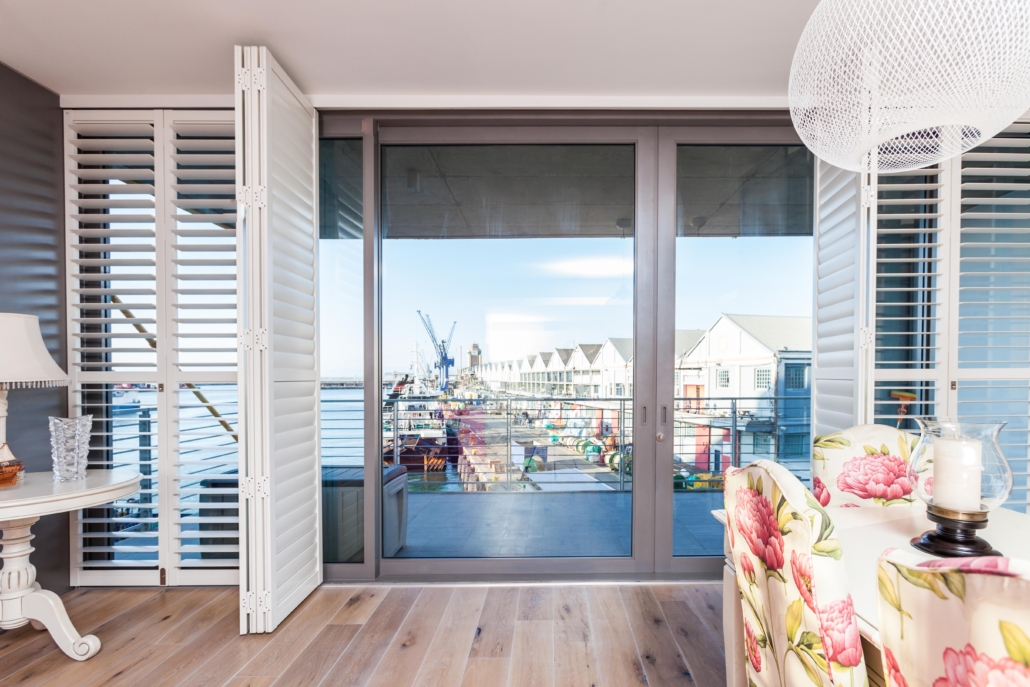
Privacy shutters are adjustable interior shutters designed to improve privacy while maintaining natural light and airflow. They create flexible living spaces, enhance home aesthetics and offer greater control than curtains or blinds.
Privacy shutters are adjustable louvre shutters installed inside homes to create privacy without sacrificing light or ventilation. They’re commonly used as room dividers, patio enclosures and window coverings throughout South Africa.
Key takeaways:
- Privacy shutters block outside views completely when closed, while still letting you angle the louvres for light and airflow
- They work as fixed window coverings and as flexible room dividers for open-plan spaces
- Popular rooms include bedrooms, bathrooms, home offices and covered patios
- They’re not designed as a security product; for that, security shutters are the better fit
- Available in wood or aluminium, depending on whether the priority is warmth or weather resistance
- A well-fitted set adds to a home’s finish and resale appeal, similar to other custom shutter installations
- Pricing depends on size, configuration (sliding, bi-fold or hinged) and material choice
What Are Privacy Shutters?
Privacy shutters are part of House of Supreme’s broader shutters range, built specifically to close off a space completely while keeping the option to let light and air back in.
Unlike a fixed screen or wall, the louvres tilt open when you want a view or a breeze, and close flat when you want the space fully private. This makes them different from most window coverings, which are built primarily for light control rather than full visual seclusion.
They’re most often used in two ways: as a standard window treatment in rooms like bedrooms and bathrooms, and as a room divider, separating an open-plan space into a more private zone on demand.
Because every set is custom-manufactured to the opening, they can be configured as hinged, bi-fold or sliding panels depending on how much space you have and how the area is used.
Benefits of Privacy Shutters
The main appeal is control. Where curtains give you an on-or-off choice and blinds sit somewhere in between, privacy shutters let you dial in exactly how much of the outside world you want visible, from fully open to completely sealed.
That matters most in rooms facing the street, a neighbour’s window, or a shared driveway, where you want the option of privacy without living with permanently closed curtains.
They also hold up better over time than fabric alternatives. Wood or aluminium louvres don’t sag, fade or need periodic replacing, and because they’re built into the frame or track rather than hung in front of it, they read as a permanent architectural feature rather than a temporary fix.
That’s part of why they tend to add more to a home’s finish and resale value than blinds or curtains covering the same opening.
Privacy Shutters vs Curtains vs Blinds
| Feature | Privacy Shutters | Curtains | Blinds |
| Light control | Fully adjustable via louvres | Partial, depends on fabric | Good |
| Privacy | Excellent | Excellent when closed | Moderate |
| Airflow | Excellent | Excellent | Limited |
| Durability | Long-lasting, built-in fixture | Fades, needs replacing | Moderate |
| Security | Moderate | Low | Low |
| Property value | High | Low | Low |
The clearest advantage privacy shutters have over curtains and blinds is that they don’t force a trade-off between privacy and airflow. Curtains give you privacy but block ventilation when closed; blinds ventilate reasonably well but rarely give full privacy at the edges. Shutters do both by adjusting the louvre angle rather than choosing between open and shut.
Best Rooms for Privacy Shutters
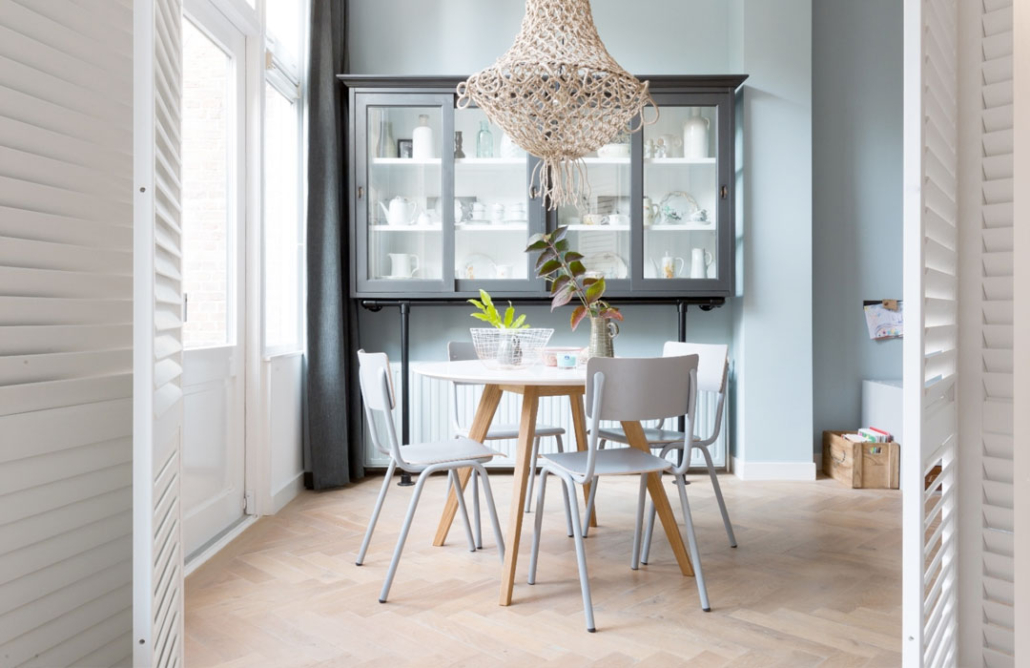
Bedrooms are the most common application, particularly for homes facing the street or a neighbouring property, where full seclusion at night matters. Bathrooms are a close second, since privacy shutters block outside views completely while still allowing steam and moisture to ventilate out through the angled louvres.
Home offices benefit too, especially for video calls or focused work where you want to control what’s visible behind you without losing natural light. And increasingly, homeowners use privacy shutters as room dividers in open-plan living areas, closing off a study nook or a dining space from the rest of the room without a permanent wall.
Covered patios are another strong fit. If your outdoor entertaining area faces a neighbour’s yard or a shared boundary, wooden shutters or aluminium privacy shutters can screen the space off entirely when you want it, and open back up for full airflow when you don’t.
Privacy Shutters vs Security Shutters
It’s worth being clear about what privacy shutters are and aren’t built for. They’re designed to control visibility and light, not to resist forced entry.
If security is the priority for a specific opening, particularly ground-floor windows or doors, security shutters are purpose-built with reinforced frames and locking mechanisms that privacy shutters don’t include.
Many homeowners use both across a property: privacy shutters on interior rooms and room dividers where visibility control matters most, and security shutters on vulnerable exterior openings where forced-entry resistance is the priority.
The two products solve different problems, and it’s rarely a question of choosing one over the other for the whole home.
Are Privacy Shutters Suitable for Patios and South African Weather?
Yes, with the right material choice. Aluminium privacy shutters handle outdoor exposure well, including coastal humidity and temperature swings, without warping or corroding.
Wood performs better indoors, where it isn’t exposed to constant moisture; for patios and other exterior applications, aluminium is generally the safer material.
If you’re weighing up interior versus exterior placement more broadly, our guide on interior vs exterior shutters covers how to decide based on the specific opening and what problem you’re solving for.
Design Ideas for Privacy Shutters
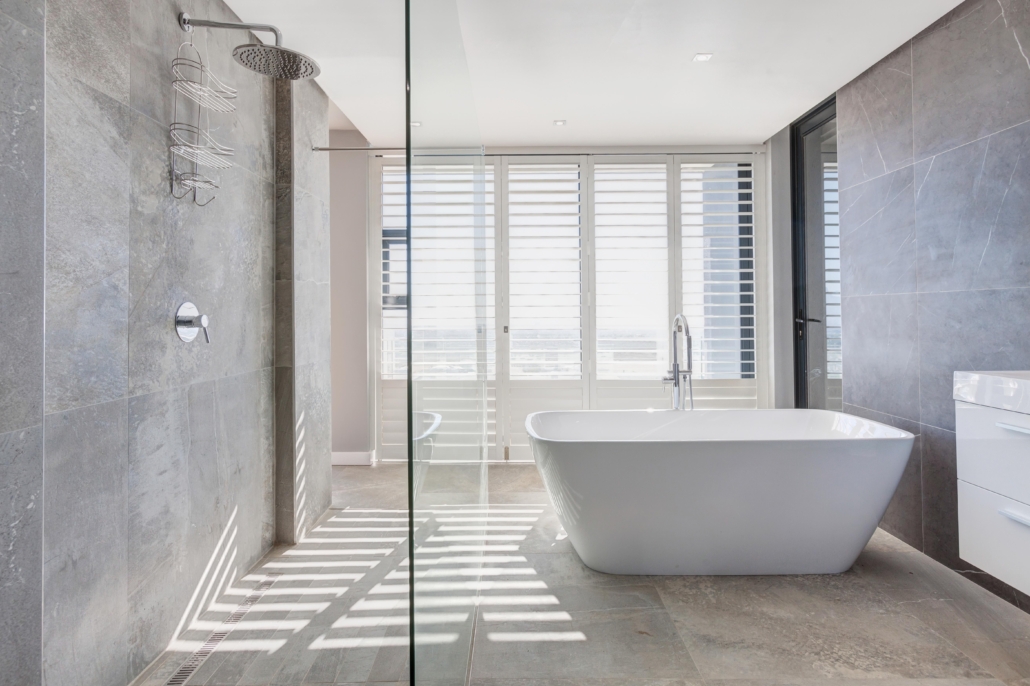
Privacy shutters work well as a design feature, not just a functional one. In bedrooms, a full-height set framing a window adds architectural weight to an otherwise plain wall.
As room dividers, they can replace a section of wall in an open-plan home, letting light pass through the space even when the louvres are angled for privacy.
For patios, pairing sliding privacy shutters with motorised blinds elsewhere in the same space gives you a mix of manual and automated control across the whole entertaining area.
Colour-matching the shutter finish to existing window frames or door trim also helps them read as a built-in feature rather than an addition.
Maintenance
Privacy shutters are low-maintenance regardless of material.
- Regular dusting with a soft cloth keeps the louvres clean, and an occasional wipe-down with a slightly damp cloth handles anything dust alone won’t shift.
- Aluminium sets need little beyond this; wooden sets benefit from an occasional polish or conditioner to keep the finish looking rich.
- It’s also worth checking the hinges or sliding track periodically, particularly on room-divider configurations that get opened and closed daily.
Cost Factors for Privacy Shutters
Pricing depends on a few variables:
- Size and number of openings: larger windows, doors or room-divider spans need more material
- Material: wood typically costs more upfront than aluminium, though aluminium is often the practical choice for patios
- Configuration: hinged, bi-fold and sliding systems each have different manufacturing requirements
- Application: a full room-divider installation costs more than a single window opening
Because every set is custom-made, the most accurate way to get a figure is a personal quote based on your specific space rather than a generic price list.
Common Mistakes to Avoid
A few issues come up often enough to flag directly. Choosing wood for an exterior or high-moisture application is the most common one, since timber can swell or warp in conditions aluminium handles easily.
Underestimating room-divider spans is another; a divider needs enough clearance on either side for bi-fold or sliding panels to stack without blocking a walkway.
Finally, treating privacy shutters as a security measure is a mistake worth avoiding: if forced-entry resistance matters for an opening, that’s a job for dedicated security shutters, not privacy louvres.
Are Privacy Shutters Worth the Investment?
For most homeowners, yes. The combination of full visual privacy, adjustable light and airflow, and durability compared to curtains or blinds tends to justify the higher upfront cost, especially in rooms or outdoor spaces where privacy is a daily concern rather than an occasional one.
The main decision is matching the material and configuration to the space: wood or aluminium depending on exposure, and hinged, bi-fold or sliding depending on how the area is used.
House of Supreme is also a proud affiliate member of the South African Institute of Architects (SAIA), a standard that speaks to the quality and design integrity behind our custom shutter installations.
Frequently Asked Questions
Are privacy shutters better than blinds?
For full seclusion, yes. Privacy shutters block outside views completely when closed while still allowing airflow through the angled louvres, something most blinds can’t match at the edges.
Can privacy shutters divide a room?
Yes. Configured as bi-fold or sliding panels, privacy shutters are commonly used to divide open-plan spaces, closing off a study, dining nook or dressing area without a permanent wall.
Are privacy shutters suitable for patios?
Yes, particularly in aluminium. They handle outdoor exposure well and can fully enclose a patio for privacy or open completely for airflow and entertaining.
Do privacy shutters improve home value?
Generally, yes. As a permanent, custom-fitted feature rather than a removable accessory, they’re factored into a home’s overall finish in the same way other quality shutter installations are.
Are privacy shutters a security feature?
No. They’re built for visibility and light control, not forced-entry resistance. Where security is the priority, dedicated security shutters are the appropriate product.
Do you have more questions about our privacy shutters, or would you like to request a quote? Email info@houseofsupreme.co.za or call our head office on 011 462 7096 for help.

