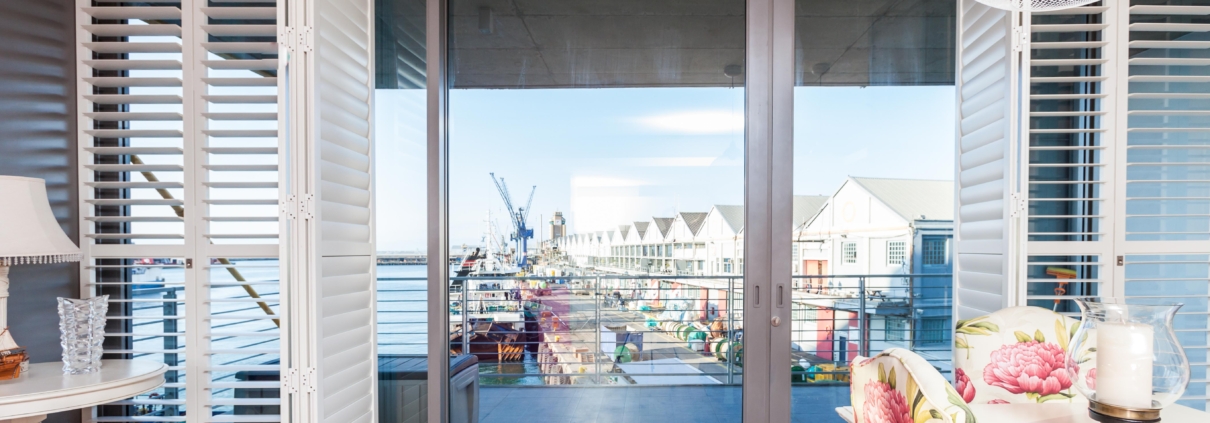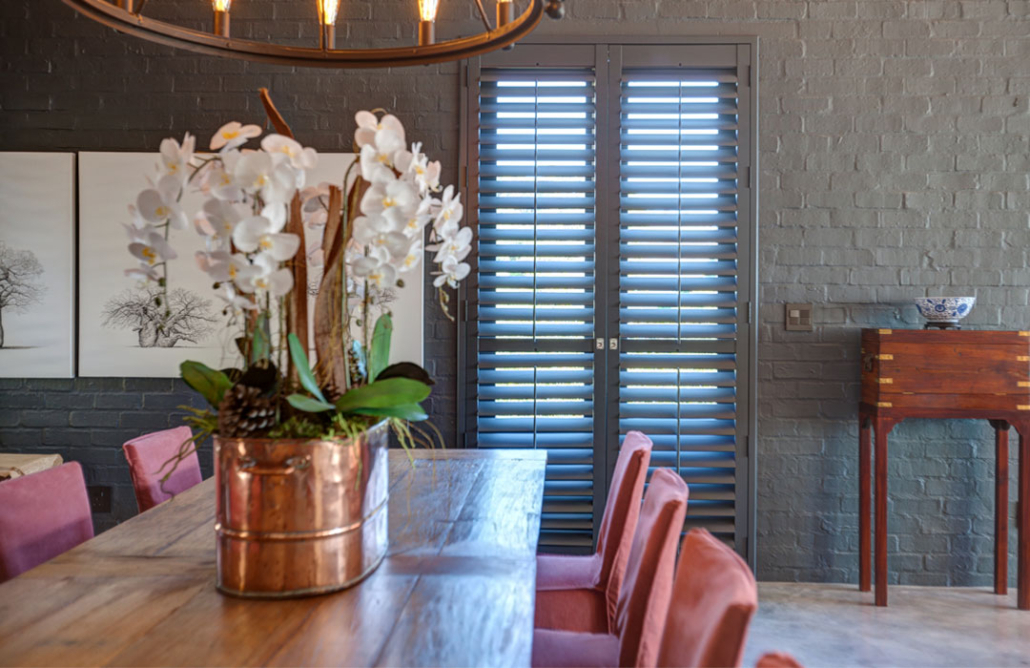
The right window blinds depends heavily on the room. Bathrooms need moisture resistance, bedrooms need reliable privacy and blockout options, and home offices need glare control without losing daylight. This guide breaks down the best blinds for each room in a typical home.
Key takeaways:
- Bathrooms and kitchens need moisture-resistant materials like aluminium or PVC-coated blinds
- Bedrooms benefit most from blockout or heavier-privacy options, with motorisation useful for scheduled morning light
- Living rooms suit versatile styles that balance daylight, privacy and décor
- Home offices do best with glare-reducing options like Sheerweave that don’t sacrifice natural light
- Large windows and sliding doors across any room usually suit vertical blinds better than a single roller panel
- Matching material to room conditions matters more for longevity than matching to décor alone
Living Room Window Blinds
Living rooms typically face the most competing demands: enough privacy for evenings, enough daylight during the day, and a look that fits the rest of the room’s décor.
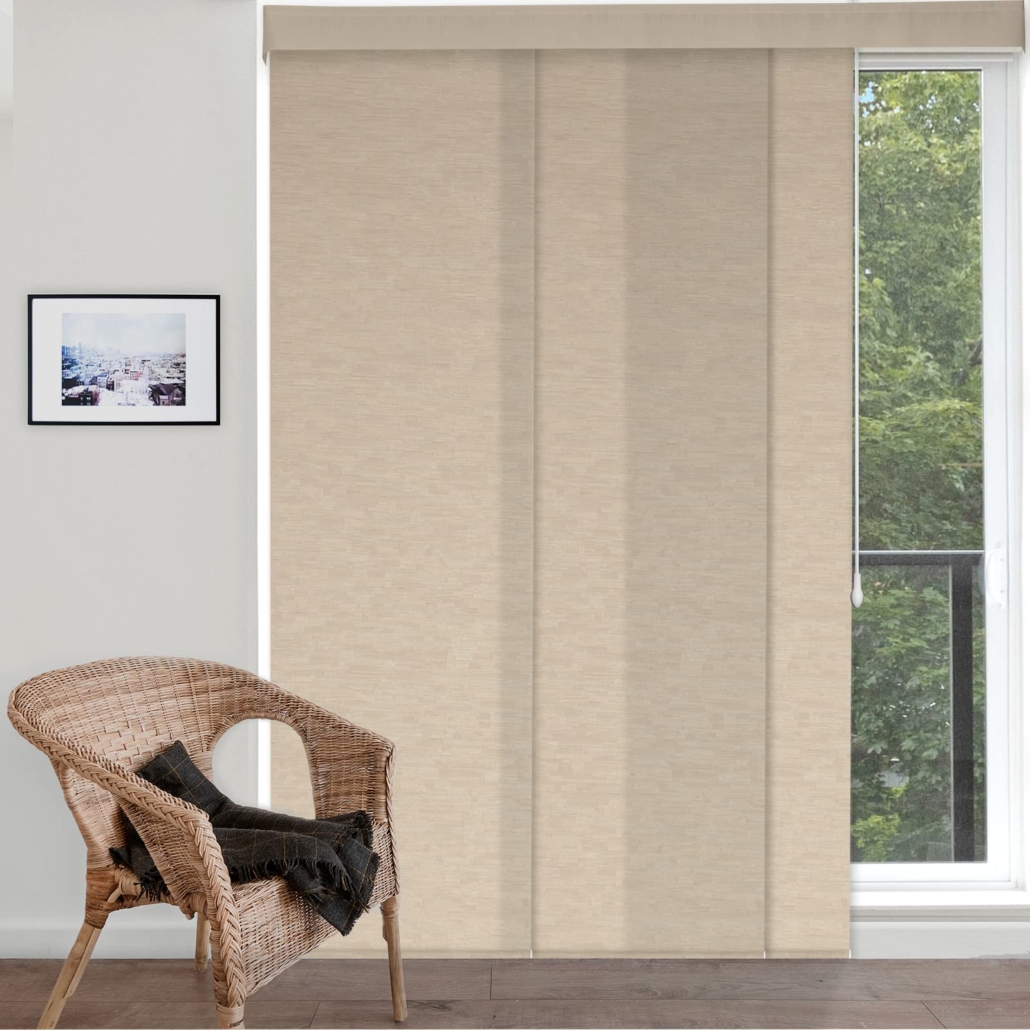
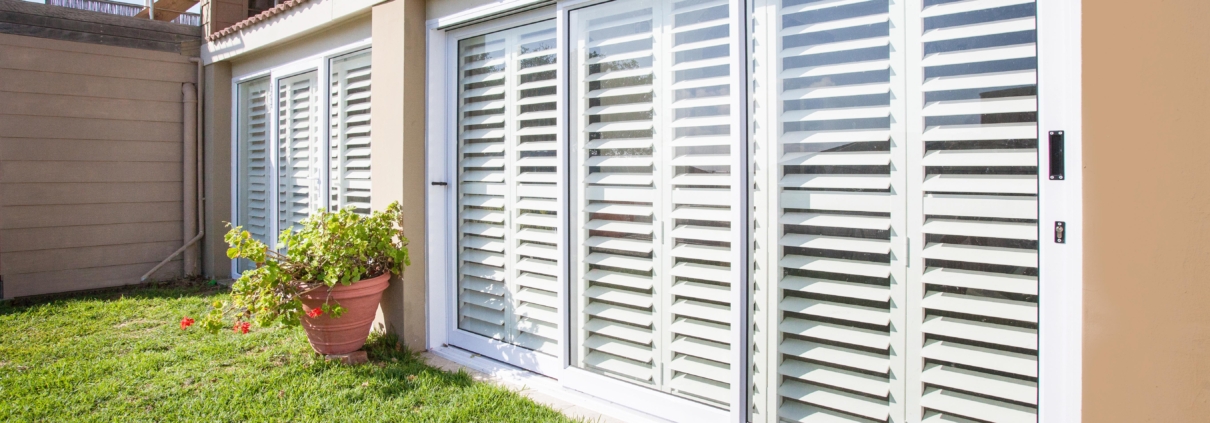
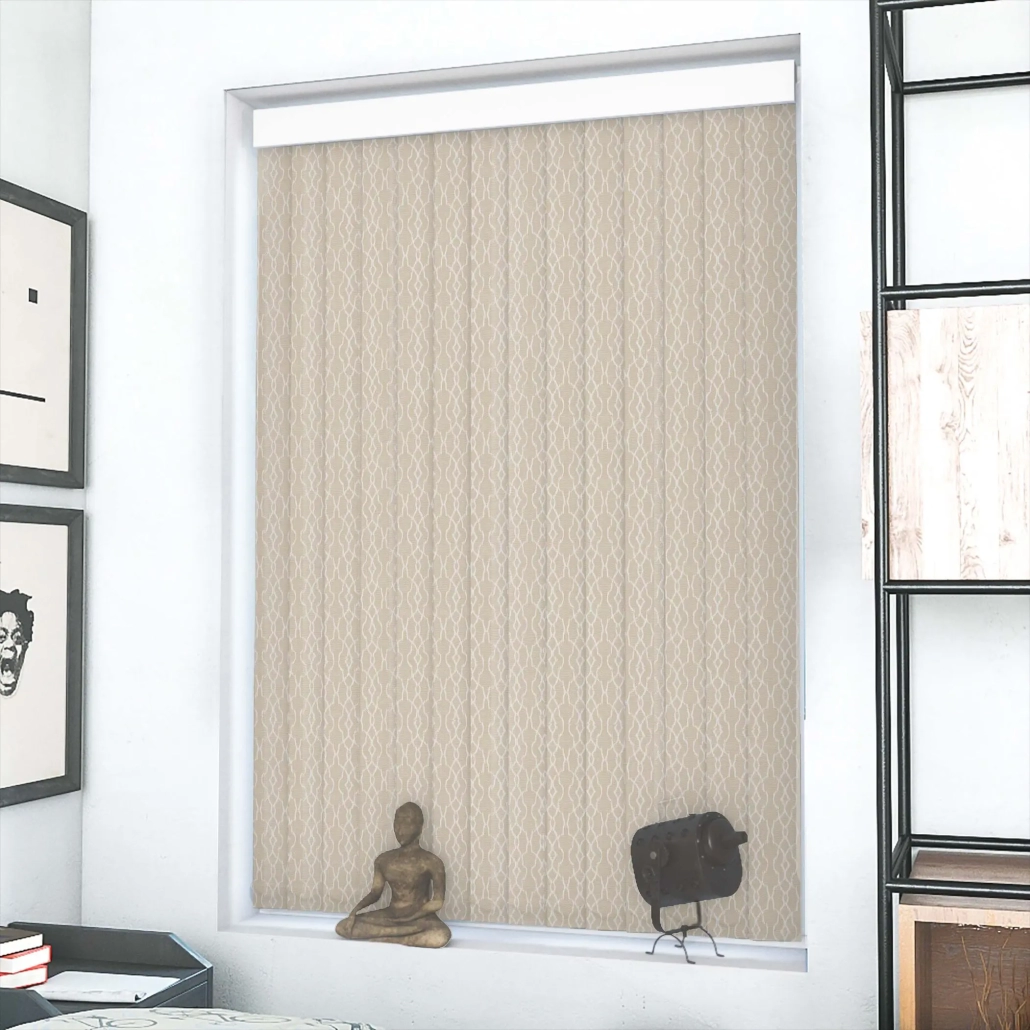
Vertical window blinds work well for larger living room windows and sliding doors, letting you draw panels fully back for an open view or rotate them for adjustable light and privacy.
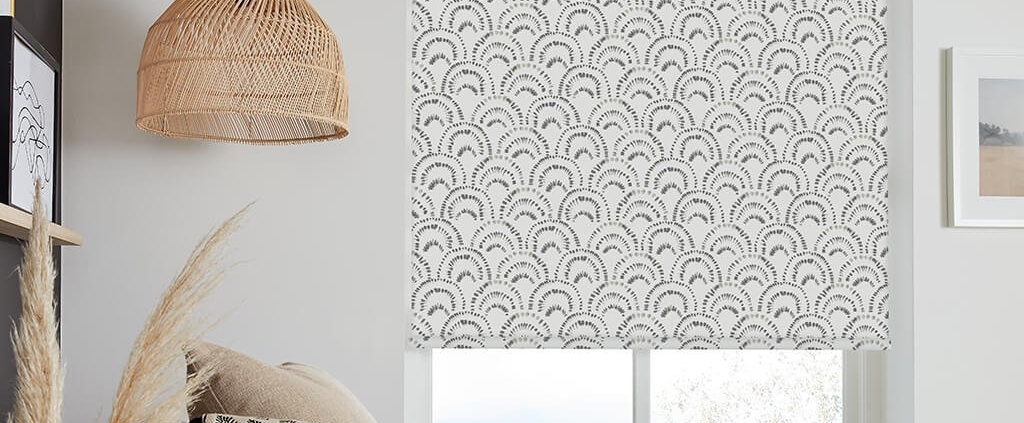
For a softer, more decorative finish, Roman blinds suit smaller or standard living room windows, folding into neat pleats when raised.
If the room gets strong afternoon sun, Sheerweave blinds are worth considering too, since they cut glare and UV without shutting out the view, which matters in a room people spend a lot of time in during the day.
Bedroom Window Blinds
Bedrooms are where privacy and light control matter most, particularly for anyone sensitive to early morning sun.
Wood Venetian blinds give full control over light angle and privacy, and their natural finish suits most bedroom décor.
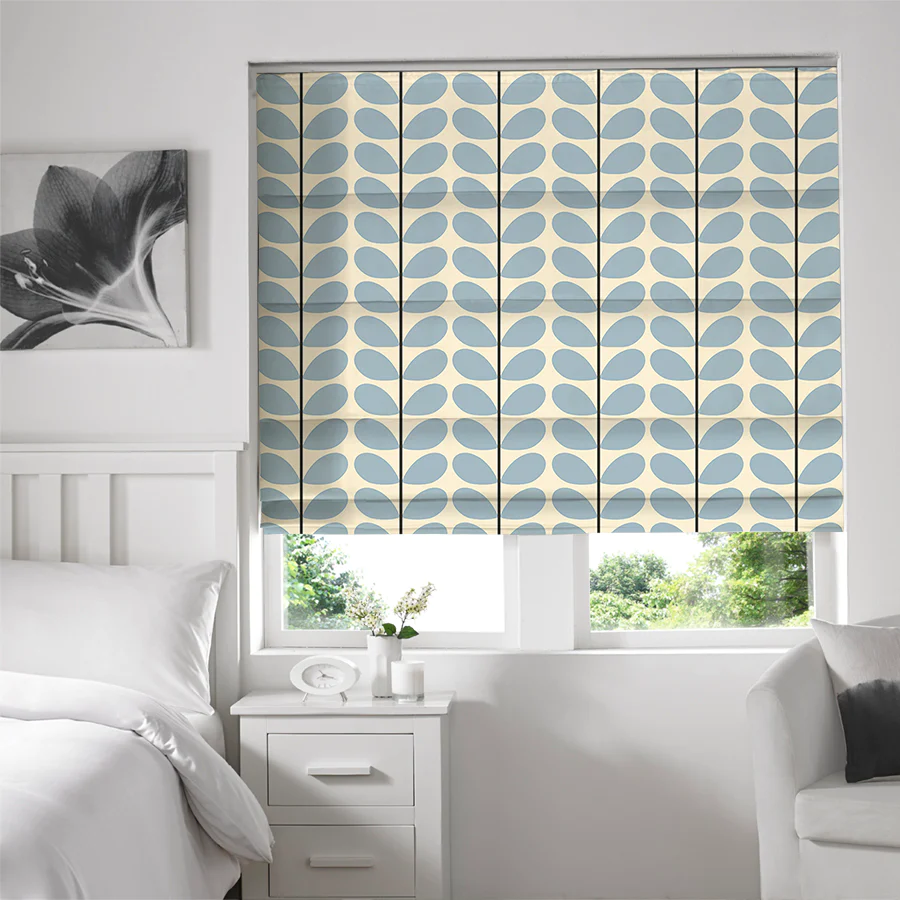
Roman blinds with blockout lining are a strong option for anyone wanting a darker room for sleep, since the lining blocks light far more completely than standard slats.
Motorised window blinds options are particularly useful in bedrooms, letting you schedule blinds to open gradually in the morning rather than reaching for a cord, or close automatically at a set time each evening.
Kitchen Window Blinds
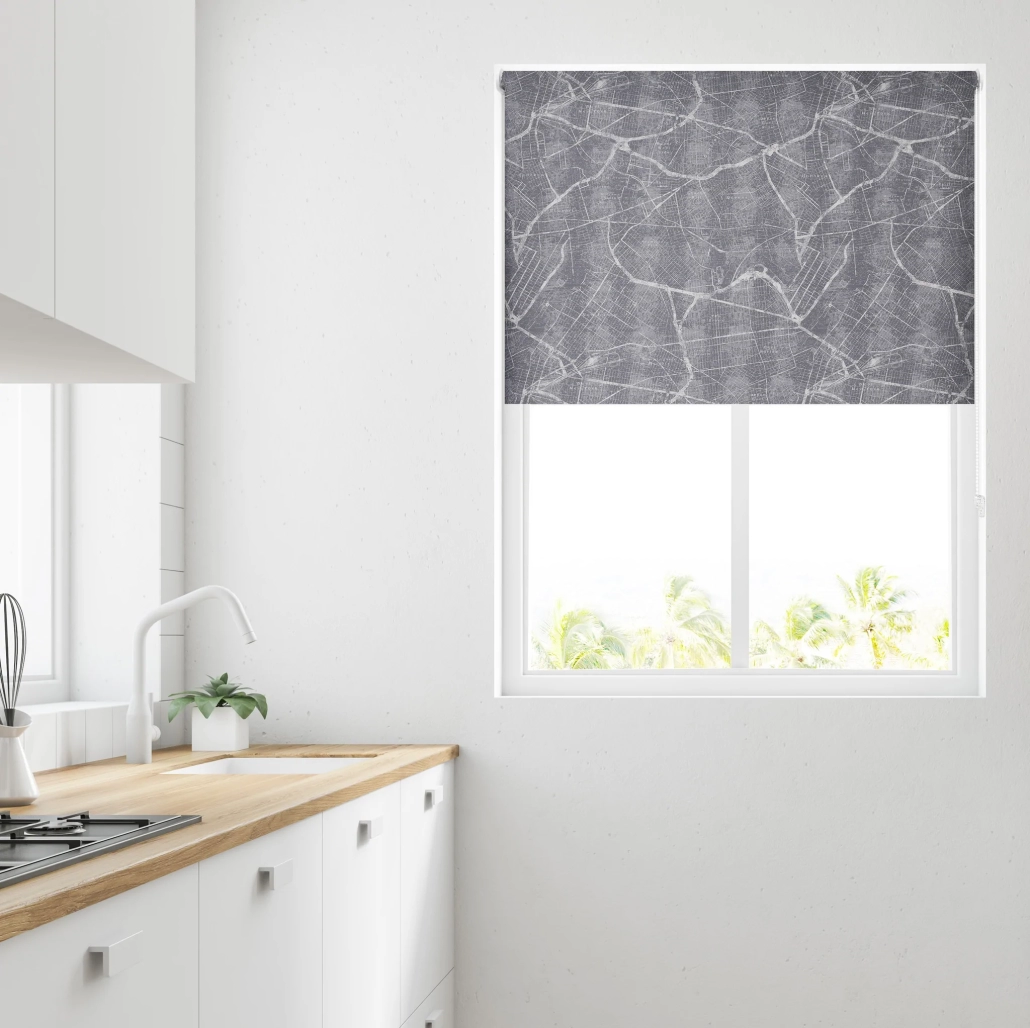
Kitchens deal with steam, splashes and grease, which rules out untreated fabric and wood for most installations. Aluminium blinds are the standard recommendation here, since the material resists moisture and wipes clean easily without warping.
Roller blinds in a wipeable, moisture-resistant fabric are a reasonable alternative if you want a different look, though aluminium remains the more durable choice directly above sinks or stovetops.
Bathroom Window Blinds
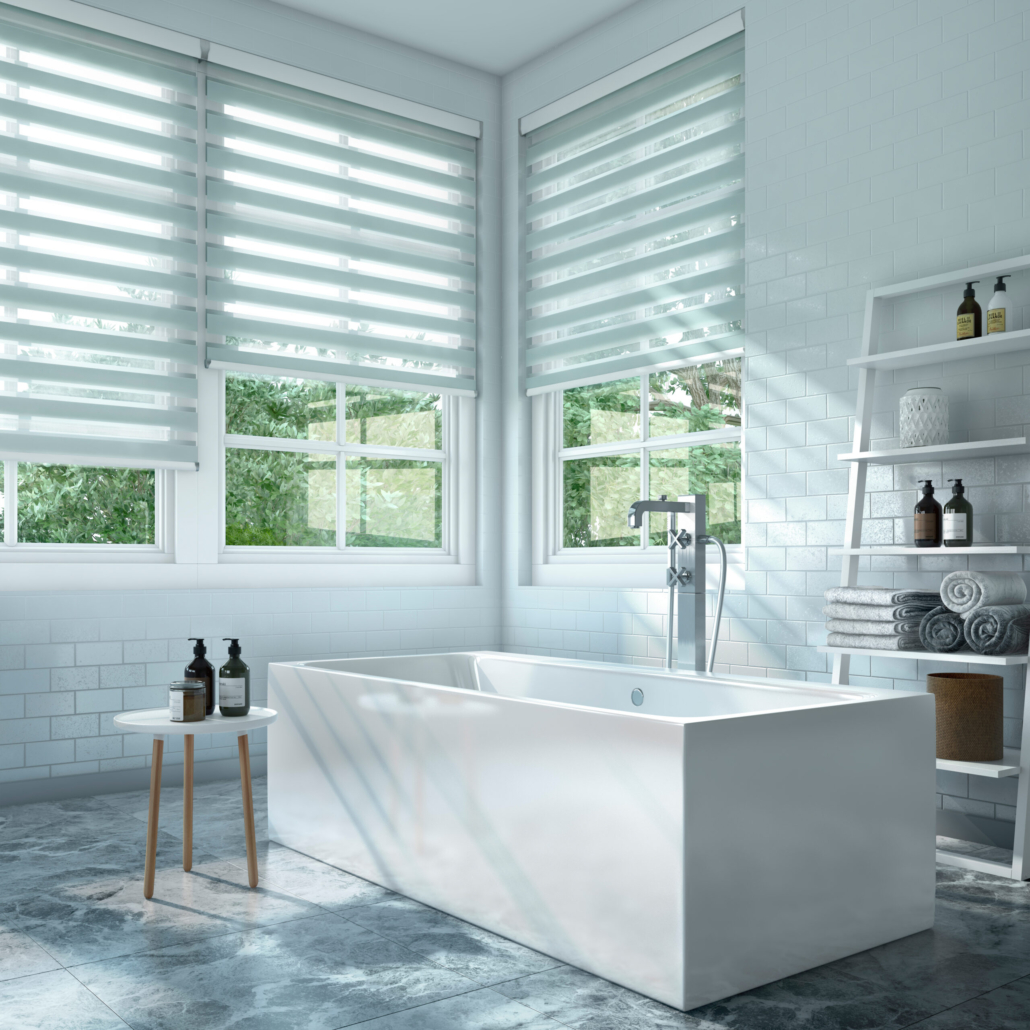
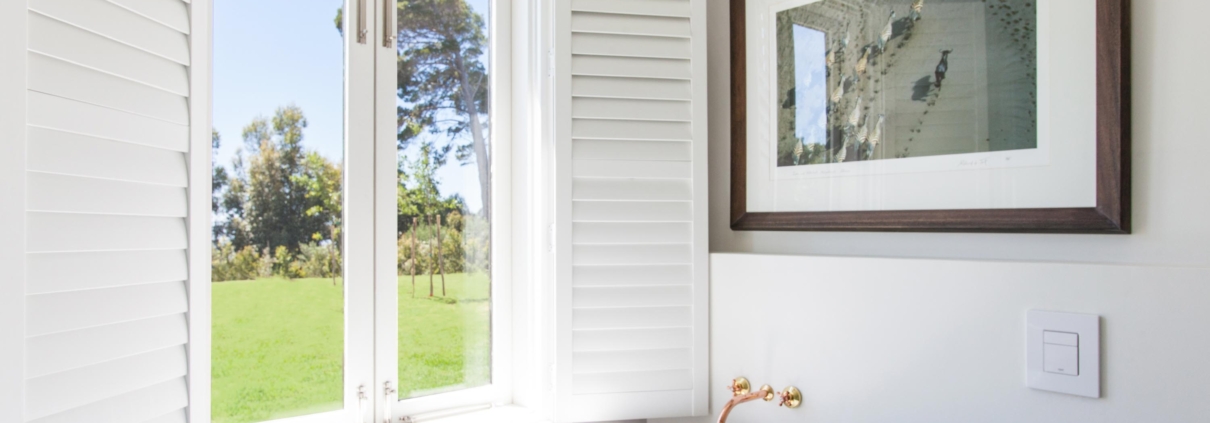
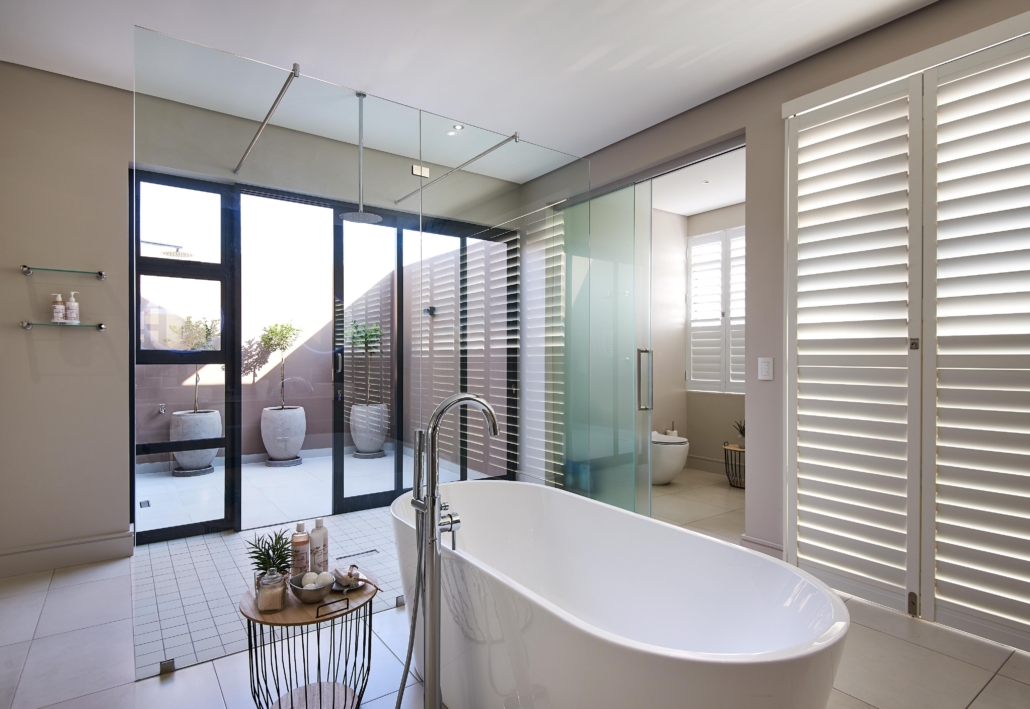
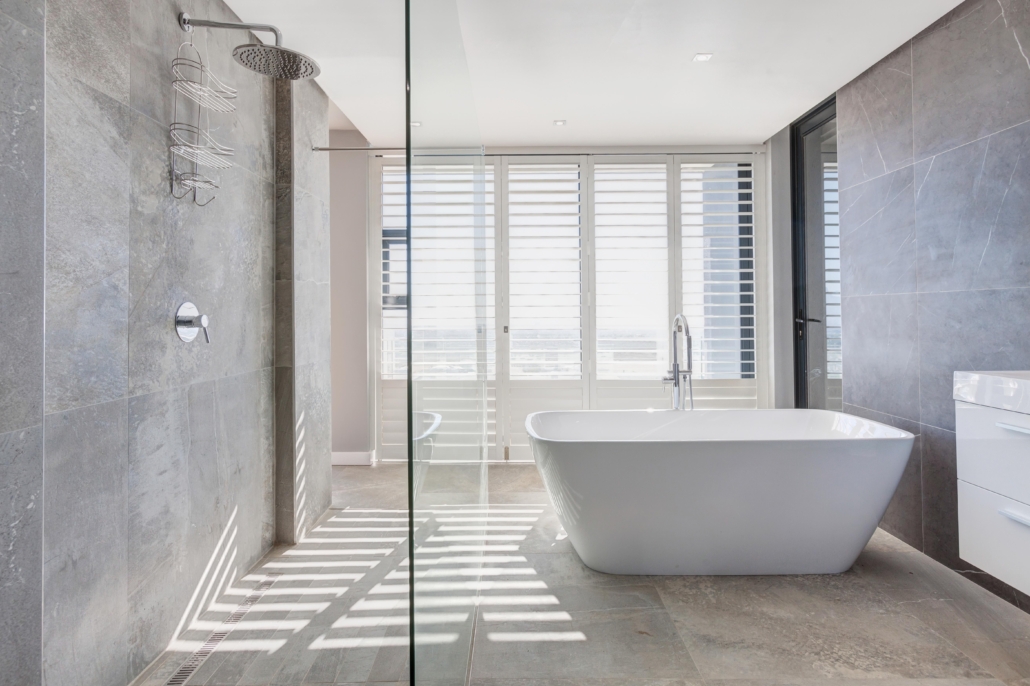
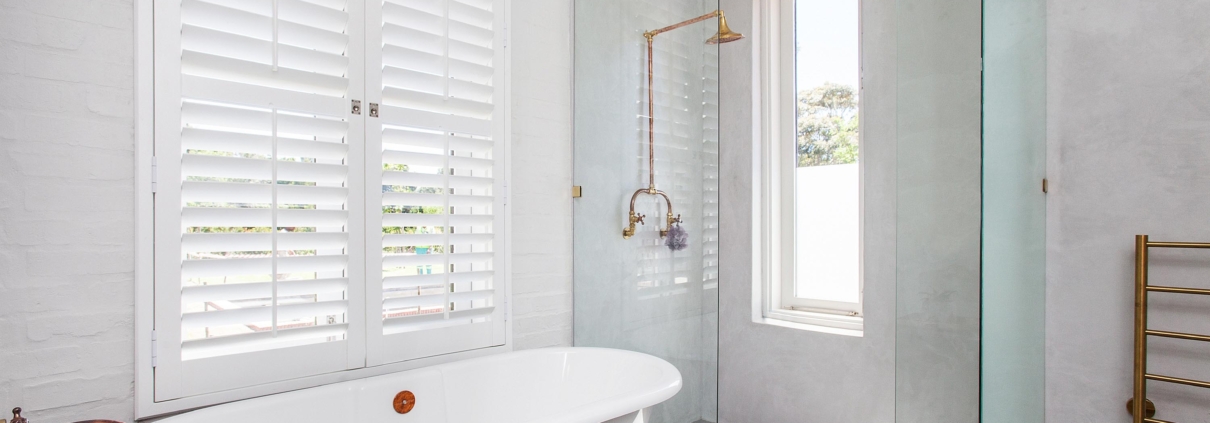
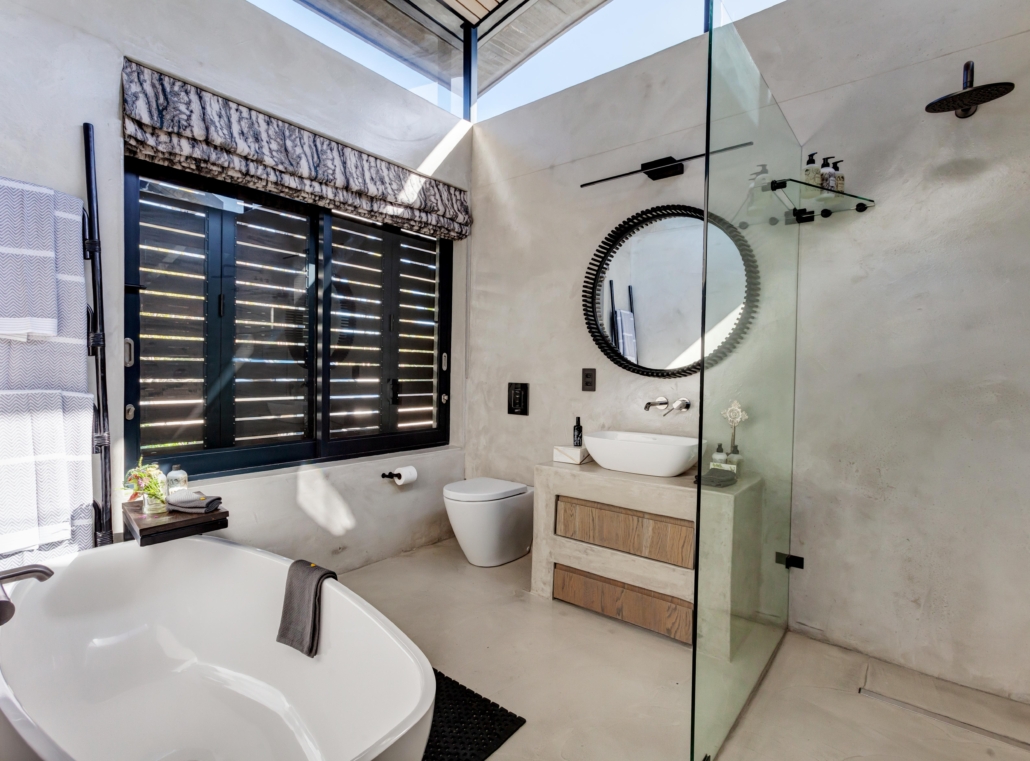
Bathrooms have the highest moisture exposure of any room, and it rules out most wood and untreated fabric options entirely.
Aluminium and PVC-coated window blinds are the practical choice, resisting warping, swelling and mould in a way timber and standard fabric can’t.
If privacy is the top priority, for a bathroom facing a street or neighbouring property, look for aluminium Venetian styles with a full slat closure rather than a sheer or partially-open fabric.
Home Office Blinds
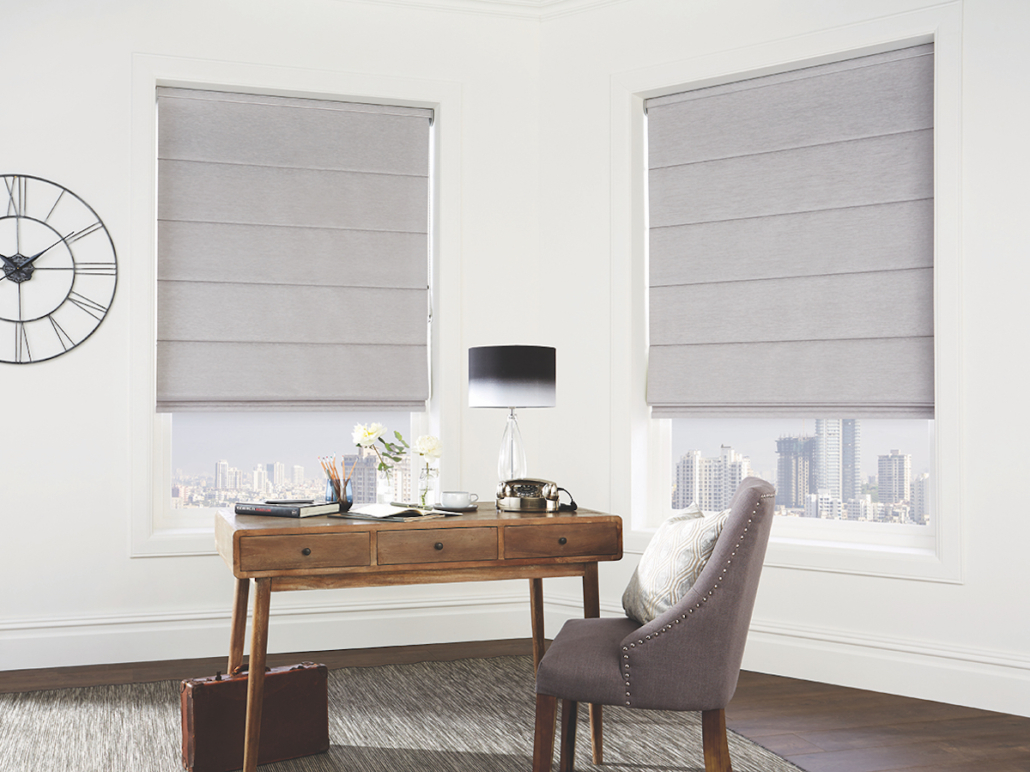
Home offices need a specific balance: enough natural light to work comfortably, without the glare that makes screens hard to read or video calls uncomfortable.
Sheerweave blinds are one of the better fits here, filtering harsh light and UV while keeping the room bright rather than dim.
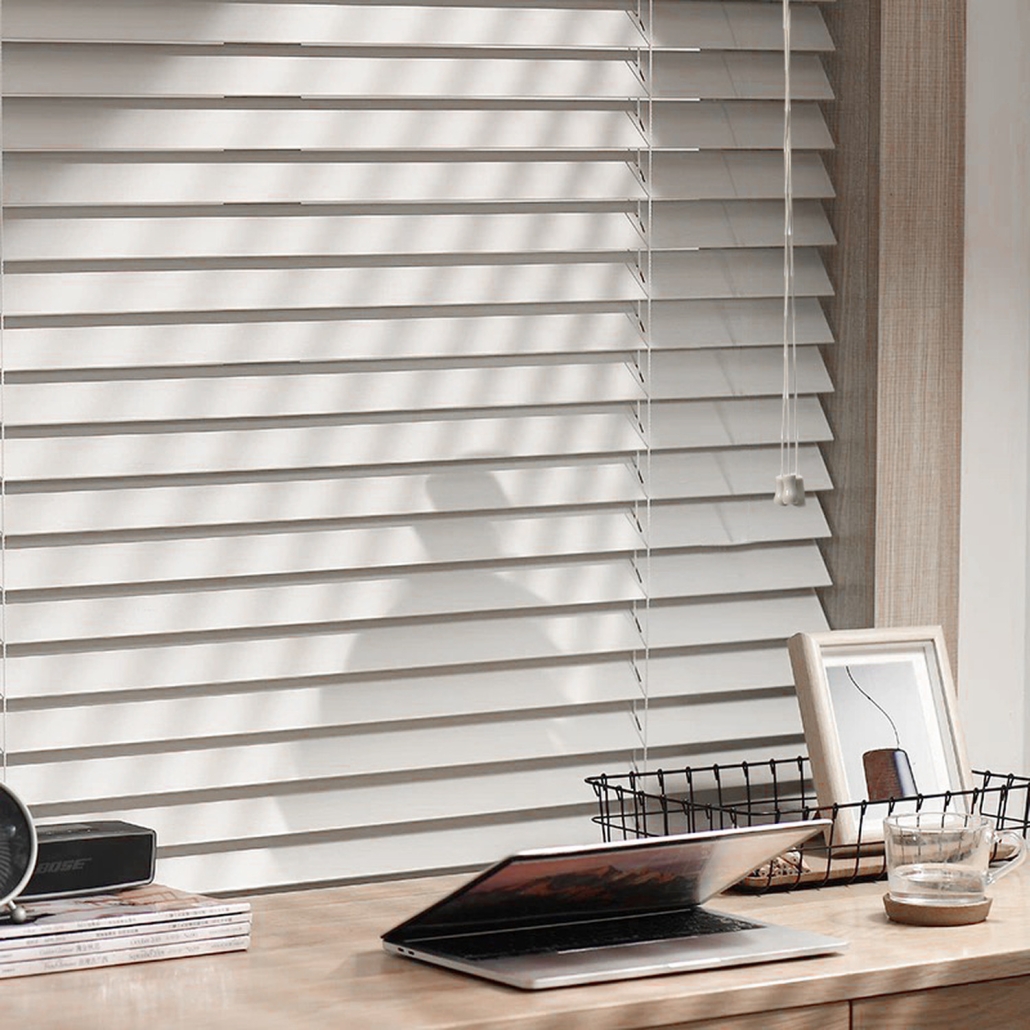
For a more adjustable option, wood or aluminium Venetian blinds let you fine-tune the slat angle throughout the day as the sun moves, which suits a room used for long working hours.
Which Blind Works Best? Room-by-Room Summary
| Room | Recommended Type | Why |
| Living room | Vertical or Roman | Balances daylight, privacy and larger windows |
| Bedroom | Wood Venetian or blockout Roman | Strong privacy and light control for sleep |
| Kitchen | Aluminium | Moisture and grease resistant, easy to wipe clean |
| Bathroom | Aluminium or PVC-coated | Handles humidity without warping |
| Home office | Sheerweave or Venetian | Reduces glare while preserving natural light |
Frequently Asked Questions
Which window blinds are best for bathrooms?
Aluminium or PVC-coated window blinds handle bathroom humidity far better than wood or untreated fabric, resisting warping and moisture damage over time.
Which blinds reduce heat the most?
Sheerweave blinds are the strongest option for heat and glare reduction, blocking up to 95% of UV rays while still letting you see out during the day.
Which blinds give the most privacy?
Roman blinds with blockout lining or fully-closing Venetian styles give the most complete privacy, particularly useful in bedrooms and street-facing rooms.
Which blinds suit sliding doors?
Vertical blinds are generally the most practical choice for sliding doors and other large openings, since panels draw back cleanly to the side.
Are window blinds custom-made for each room?
Yes. Every blind is measured and manufactured to your specific window, so the same style can be adapted across different room sizes and shapes in your home.
House of Supreme is also a proud affiliate member of the South African Institute of Architects (SAIA), a standard that speaks to the quality and design integrity behind our custom blinds installations.
Do you have more questions about choosing the right blinds for your home, or would you like to request a quote? Email info@houseofsupreme.co.za or call our head office on 011 462 7096 for help.