

Bypass Shutters: Keeping Your Home Cozy & Energy-Efficient
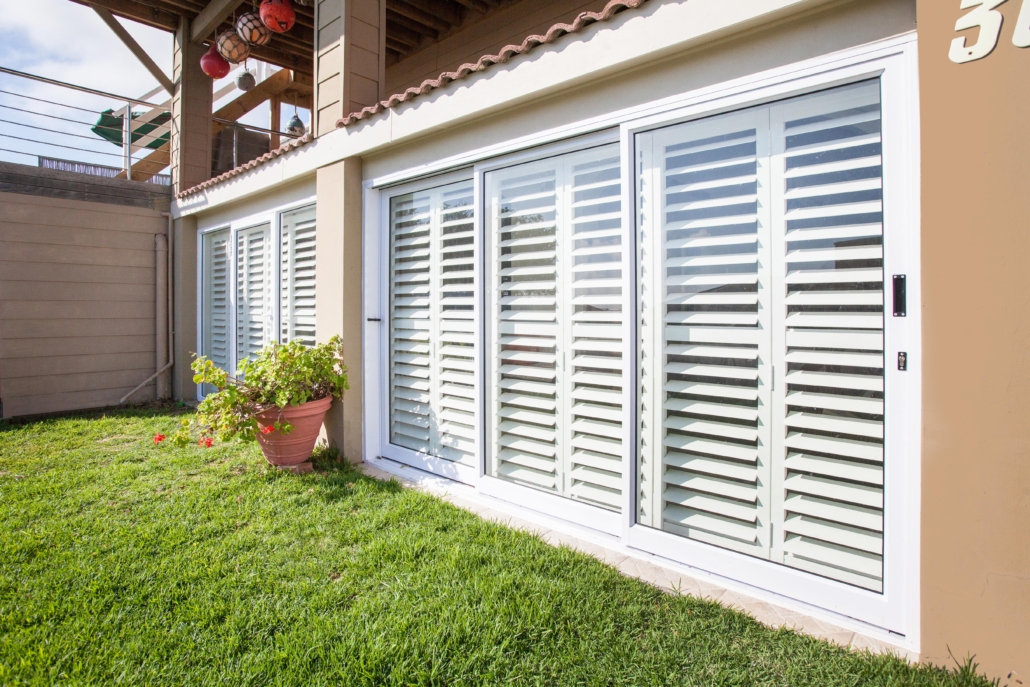
Bypass shutters, also called sliding shutters, are panels that slide along a track system rather than swinging open like hinged shutters. This lets you cover large openings, sliding doors and room dividers without the panels intruding into the room, while still offering full light, privacy and insulation control.
Key takeaways:
- Bypass shutters slide along a track instead of swinging open, so panels never intrude into the room
- They’re the practical choice for large openings like sliding doors, where hinged panels would need too much swing clearance
- Closed, they insulate a space effectively, helping regulate heat in summer and retain warmth in winter
- Available in wood or aluminium, with material choice depending on whether the opening is interior or exterior
- Well suited to room-divider applications in open-plan homes
- Fewer moving parts than bi-fold shutters, which can mean less to maintain over time
- Pricing depends on track length, panel count and material
What Are Bypass Shutters?
Bypass shutters are part of House of Supreme’s Privacy & Bypass Shutters range, built around a sliding-track mechanism rather than hinges. Each panel runs on its own track, mounted above the opening, and slides past the others to stack neatly to one side.
That’s where the name comes from: the panels bypass each other as they move, rather than folding away like a bi-fold shutter or swinging open like a hinged one.
This mechanism makes them especially useful for large openings, sliding glass doors, and situations where you want the full opening accessible without any panel swinging into the room.
If there’s enough track space on either side, panels can slide completely clear of the opening; if space is limited, at least one panel typically stays overlapping the opening.
Benefits of Bypass Shutters
The biggest practical advantage is space efficiency.
Because panels run parallel to the opening rather than swinging outward, bypass shutters work well in tight spaces, like balconies or narrow patios, where a hinged or bi-fold configuration would need clearance you don’t have.
They’re also less prone to wear over time. With fewer moving parts than bi-fold shutters and no hinges to maintain, there’s simply less that can loosen or need adjustment years down the line.
And because panels are top-hung rather than resting on their own weight, they’re less likely to sag, which means individual panels can be built taller and wider than a hinged equivalent allows.
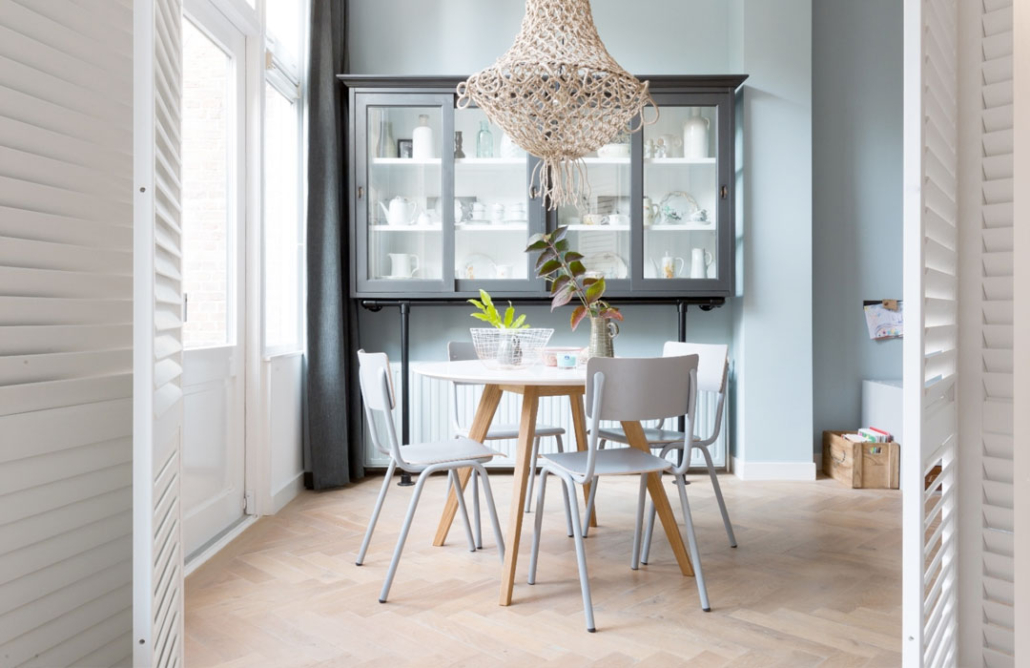
Beyond function, bypass shutters double as a flexible room divider. Sliding a set of panels across an opening can create privacy in an open-plan home, screening off a study nook or dining area, then sliding back to reopen the space entirely.
How Bypass Shutters Improve Insulation
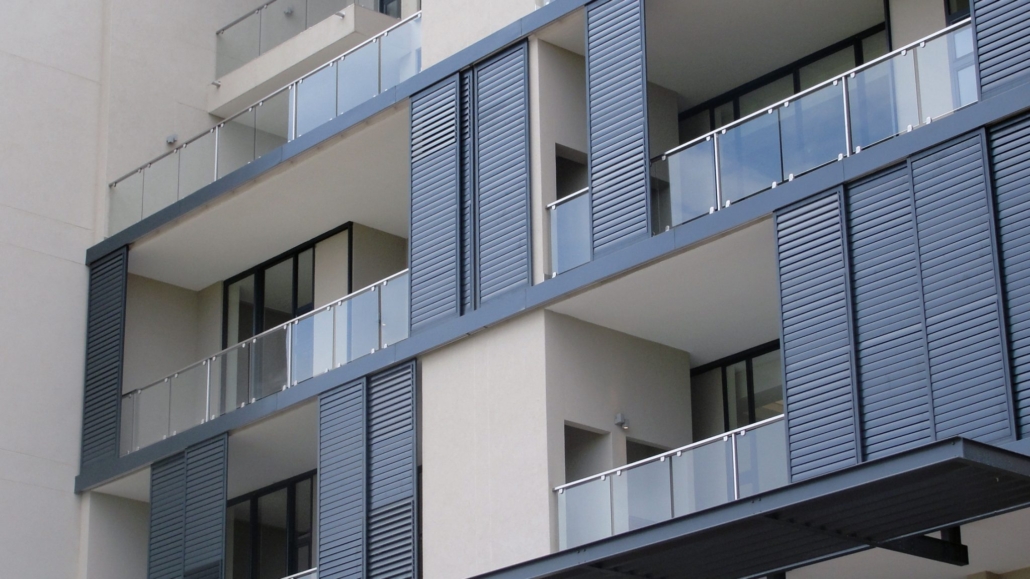
Closed, bypass shutters act as a solid barrier between a room and the outside, in the same way other quality shutters do.
The panels fit closely along the track, which limits draughts more effectively than curtains and reduces heat transfer through the opening. In summer, this helps keep direct heat out; in winter, it helps retain warmth that would otherwise escape through an uncovered sliding door.
The insulation performance depends partly on material. Solid timber panels tend to offer stronger natural insulation than aluminium, though a well-fitted aluminium set with minimal gaps still performs considerably better than an uncovered opening.
Bypass vs Hinged vs Bi-fold Shutters
| Feature | Bypass Shutters | Hinged Shutters | Bi-fold Shutters |
| Movement | Slides along a track | Swings open like a door | Folds and stacks against itself |
| Space needed | Minimal, panels run parallel to opening | Full swing clearance required | Some clearance for folded stack |
| Best for | Large openings, sliding doors | Standard windows | Wide openings needing full access |
| Moving parts | Track and rollers only | Hinges | Hinges plus folding joints |
| Room divider use | Excellent | Limited | Good |
For most large sliding doors or room-divider applications, bypass shutters are the more space-efficient choice. Hinged shutters suit standard windows where swing clearance isn’t a concern, while bi-fold shutters strike a middle ground for wide openings where you still want the panels to fold flat rather than slide.
Best Rooms and Openings for Bypass Shutters
Sliding patio and glass doors are the most common application, since the track system handles wide spans without needing swing room on either side.
Open-plan living and dining areas are another strong fit, particularly where bypass shutters double as a room divider between the two spaces. Larger bedroom windows also work well, especially where a hinged configuration would swing into a tight layout.
Materials: Wood vs Aluminium
Bypass shutters are available in both timber and aluminium, and the right choice depends on where the opening sits.
For interior applications, wooden shutters bring warmth and natural insulation, and suit living rooms, bedrooms and interior room dividers well.
For patios, sliding doors facing the weather, or coastal properties, aluminium shutters are the more practical choice, since they resist humidity, salt air and temperature swings without warping.
If you’re unsure which material and placement suits your specific opening, our guide on interior vs exterior shutters breaks down the decision in more detail.
Maintenance
Bypass shutters are low-maintenance regardless of material. Regular dusting keeps the louvres and track clear, and an occasional wipe-down with a damp cloth handles anything dust alone won’t shift.
It’s worth checking the track periodically for dust build-up, since a clogged track is the most common cause of stiff or uneven sliding. Wooden panels benefit from an occasional polish to maintain the finish; aluminium panels need little beyond a wipe-down.
Cost Factors for Bypass Shutters
Pricing depends on a few variables:
- Track length and panel count: wider openings need more panels and longer tracks
- Material: wood typically costs more upfront than aluminium
- Application: room-divider installations spanning a full open-plan area cost more than a single sliding door
- Finish: custom colours or stains affect the final price
Because every set is custom-made to the opening, the most accurate way to get a figure is a personal quote rather than a generic price list.
Common Mistakes to Avoid
The most common issue is underestimating stacking space. If there isn’t enough clear track on either side of the opening, panels can’t slide fully clear, which limits how much of the opening you can actually open up.
Choosing wood for an exposed exterior application is another frequent mistake, since timber isn’t built to handle constant weather exposure the way aluminium is. Finally, skipping regular track cleaning can lead to sticking or uneven sliding over time, an easy problem to avoid with a few minutes of maintenance.
Buying Guide: What to Check Before You Order
- Measure the full stacking space available on either side of the opening
- Decide on material based on interior vs exterior exposure
- Consider whether the opening also needs to function as a room divider
- Check that the track can be mounted securely to your existing frame or ceiling
- Get a custom quote based on your specific opening rather than relying on standard sizing
Are Bypass Shutters Worth the Investment?
For large openings and sliding doors, bypass shutters are usually the most practical option available. The track-based design saves the swing clearance a hinged shutter needs and holds up well over time thanks to its simple mechanism. The main decision is matching material to exposure: timber for interior warmth, aluminium for exterior durability.
At House of Supreme, we’ve been manufacturing and installing custom shutters, including bypass configurations, across South African homes since 1999.
In our experience, bypass shutters are most requested for large patio doors and open-plan room dividers, where their space-saving slide mechanism makes the biggest practical difference.
House of Supreme is also a proud affiliate member of the South African Institute of Architects (SAIA), a standard that speaks to the quality and design integrity behind our custom shutter installations.
Frequently Asked Questions
What are bypass shutters?
Bypass shutters are panels that slide along a track system to cover an opening, rather than swinging open on hinges. They’re commonly used on large sliding doors and as room dividers.
Are bypass shutters better than bi-fold shutters?
For very large openings, yes, since bypass shutters need less stacking clearance. Bi-fold shutters suit openings where you want the panels to fold flat rather than slide past each other.
Do bypass shutters help with insulation?
Yes. Closed, they form a solid barrier that reduces heat transfer and draughts, similar to other quality shutter types, with solid timber offering the strongest natural insulation.
Can bypass shutters be used outdoors?
Yes, particularly in aluminium. Aluminium bypass shutters handle weather exposure well, making them a practical choice for patios and other exterior openings.
How much do bypass shutters cost?
Cost depends on track length, panel count, material and application. Since every set is custom-made, the most accurate way to get a figure is a personal quote.
What maintenance do bypass shutters need?
Very little. Regular dusting and an occasional wipe-down keep panels looking good, and periodically checking the track for dust build-up prevents sticking.
Do you have more questions about our bypass shutters, or would you like to request a quote? Email info@houseofsupreme.co.za or call our head office on 011 462 7096 for help.

